|
 |
 | | | | | | |||||||||||||||||||||||||||||||||||||||||||||||||||||||||||||||||||||||||||||||||||||||||||||||||||||||||||||||||||||||||||||||||||||||||
| | | You are in: Health | |||||||||||||||||||||||||||||||||||||||||||||||||||||||||||||||||||||||||||||||||||||||||||||||||||||||||||||||||||||||||||||||||||||||||||
|
| | Tuesday, 17 September, 2002, 09:32 GMT 10:32 UK GPs warned to be ready for smallpox 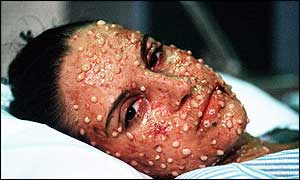 The last UK smallpox case was in 1978 Doctors must be briefed on smallpox in case of a bio-terrorist attack, an expert has warned. Dr Ewan Gerard, port medical director at Gatwick Airport, said that although it was an unlikely scenario, the potential was there for the virus to be used as a weapon. And he said that as there had been no cases in the UK since 1978, few, if any, GPs would have seen it first hand. It was vital every medic knew how to recognise smallpox and got themselves fully trained on how to deal with it and other rare diseases, he said. Terrorist "Smallpox in my opinion is not about to make a come back or be a major terrorist threat, but there is the potential. "The message is that GPs must know enough to be able to allay fears and be able to recognise the disease.
"There are only two laboratories that are legally allowed to hold the smallpox virus and they are in Russia and in America." But he said there were concerns that rogue states or individuals could take the virus and use it as a weapon. The World Health Organization (WHO) has responded to concerns about bio-terrorism by agreeing to postpone the destruction of the world's last remaining stocks of smallpox virus.
Two years ago, the WHO set 2002 as the deadline for getting rid of the virus, amid hopes that the killer disease - officially declared eradicated more than 20 years ago - would never return. But the deaths of five people from anthrax in the US following the 11 September attacks on New York and Washington heightened fears that extremists might resort to biological or chemical weapons. Tuberculosis Dr Gerard, speaking at the Annual Forum for GPs at the Royal Society of Medicine on Tuesday, said 50% of returning UK-residents report illness and about 5% need treatment. Thus it was important that GPs became fully versed in infections like malaria and typhoid which can prove fatal. He also warned that because of the government's current policy to disperse asylum seekers, many of whom are at high risk of medical problems like Tuberculosis (TB), that many more GPs would be coming into contact with the disease. "When we were medical students TB was on the decline. "But more recently it is clear that the numbers in this country have gone up. "This is associated with the migration of the population and the new immigrants. And he said that the dispersal policy could bring TB to the notice of the GPs in the leafy suburbs who may never have had a TB case before. Dr Gerard said that although his department at Gatwick regularly screened immigrants and asylum seekers for TB that they had not so far encountered any of the rarer illnesses such as Ebola or Lassa Fever, but he said they were alert to the threat. | | See also:  29 Aug 02 | Health 30 Jul 02 | Health 18 May 02 | Health 07 Jul 02 | Americas 13 Apr 02 | Politics Internet links: The BBC is not responsible for the content of external internet sites Top Health stories now: Links to more Health stories are at the foot of the page. | |||||||||||||||||||||||||||||||||||||||||||||||||||||||||||||||||||||||||||||||||||||||||||||||||||||||||||||||||||||||||||||||||||||||||
| |
|  E-mail this story to a friend E-mail this story to a friend |
| |
| Links to more Health stories |
| | | ||
 | ||||
 | | Back to top
| ||
| ---------------------------------------------------------------------------------- To BBC Sport>> | To BBC Weather>> | To BBC World Service>> ---------------------------------------------------------------------------------- © MMIII | News Sources | Privacy |