
|
 |
 | | | | | | ||||||||||||||||||||||||||||||||||||||||||||||||||||||||||||||||||||||||||||||||||||||||||||||||||||||||||||||||||||||||||||||||||||||||
| | | You are in: Health | ||||||||||||||||||||||||||||||||||||||||||||||||||||||||||||||||||||||||||||||||||||||||||||||||||||||||||||||||||||||||||||||||||||||||||
|
| | Thursday, 12 September, 2002, 23:55 GMT 00:55 UK 'Virtual friend' helps young asthmatics 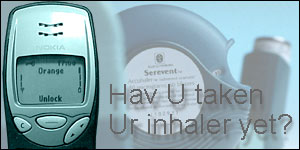 Messages are sent from 'Max', a virtual friend Young people are being helped to cope with asthma through text messages from a "virtual friend". Doctors set up a service which send them messages about sport, celebrity gossip, horoscopes - and reminders to use their inhaler. Asthmatics use either reliever or preventer inhalers. Preventers have to be taken on an ongoing basis to prevent attacks, but teenagers often forget. The 30 who took part in the month-long study all found the text reminders useful, and the number of times they forgot to use it was significantly cut.
They said they liked text messages as a method of communication and appreciated the optional provision of medical information which was available on request. The messages came from a "virtual friend" called Max. Young people developed a rapport with Max, and often sent messages back to him. Messages from Max included "Hav U taken Ur inhaler yet?" and "Yo dude, it's Max reminding u 2 take ur inhaler." Being in charge Young asthmatics said the scheme worked. One, named only as Kevin, said: "I used to [forget my inhaler] two or three times each week ... I haven't missed once this month." Doctors who ran the study said it worked because teenagers felt they were in charge of their disease, and not the other way around. Writing in the British Medical Journal, the researchers led by Dundee GP Dr Ron Neville, said: "Text messages that are reminders about treatment and useful tips on education may be a medium to allow people with chronic health problems to make their disease comply with their lifestyle, and not the other way around." Andrew Tracy, project manager for Wonderworks, a communication consultancy which was involved in the research, told BBC News Online: "Some members of the medical establishment are a bit wary about using technology to pass on medical information. "But we are looking to develop the service and looking at working with other diseases such as diabetes and HIV." He added: "It's about finding alternative ways for people to absorb information rather than just reminding them to take drugs." Teenage problem A spokeswoman for the National Asthma Campaign said: "The UK has the highest rate of severe wheeze in the world for children aged 13-14. "We know that asthma in teenagers tends to be underdiagnosed and poorly treated. "New ways of talking to teenagers via text messages and the internet are important as they are media commonly used by teenagers. The NAC has launched a new site aimed specifically at teenagers at www.kickasthma.org.uk. | | See also:  24 May 02 | Health 16 May 01 | Health 26 Jun 02 | Health 12 May 00 | Health 24 May 01 | Health 07 Sep 01 | Health Internet links: The BBC is not responsible for the content of external internet sites Top Health stories now: Links to more Health stories are at the foot of the page. | ||||||||||||||||||||||||||||||||||||||||||||||||||||||||||||||||||||||||||||||||||||||||||||||||||||||||||||||||||||||||||||||||||||||||
| |
|  E-mail this story to a friend E-mail this story to a friend |
| |
| Links to more Health stories |
| | | ||
 | ||||
 | | Back to top
| ||
| ---------------------------------------------------------------------------------- To BBC Sport>> | To BBC Weather>> | To BBC World Service>> ---------------------------------------------------------------------------------- © MMIII | News Sources | Privacy |





