
|
 |
 | | | | | | ||||||||||||||||||||||||||||||||||||||||||||||||||||||||||||||||||||||||||||||||||||||||||||||||||||||||||||||||||||||||||||||||||||||||||||||||||||||||||||||||||||||||
| | | You are in: Health | ||||||||||||||||||||||||||||||||||||||||||||||||||||||||||||||||||||||||||||||||||||||||||||||||||||||||||||||||||||||||||||||||||||||||||||||||||||||||||||||||||||||||||
|
| | Monday, 9 September, 2002, 23:44 GMT 00:44 UK Eating out poses allergy risk 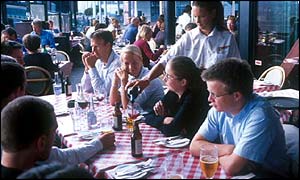 Diners need to be vigilant in restaurants Three-quarters of deaths from food allergies involve food prepared in restaurants, cafes and other commercial outlets, say experts. The Chartered Institute of Environmental Health and the Anaphylaxis Campaign have joined forces to launch a campaign to raise awareness of the risk among caterers.
Over the past two decades there has been an enormous increase in the number of people with serious food allergies. In addition, there has also been a big increase in the number of people who eat out regularly. Part of the problem is that people can fall ill after eating food that at first sight should be safe. For instance, people with a nut allergy have died after eating a coronation chicken sandwich, a piece of lemon meringue pie, Italian ice cream or a shortbread dessert. This is because the items have contained traces of nut. Long way to go The CIHE says that while food manufacturers have made significant improvements to food labelling and point of sale information, many caterers, restaurants and takeaways still have a long way to go. It says accurate product descriptions on menus and up-to-date information on ingredients are vital. Staff should be able to answer customers' questions. And the people who prepare food must take care not to contaminate it with potentially dangerous items. Hazel Gowland, of the Anaphylaxis Campaign and a speaker at the CIEH conference, said: "This is a major problem for at least one person in 100. "Food businesses may be more aware now of serious food allergies, but may not know how to manage them. "At the same time, the young consumers at greatest risk are often unaware that their symptoms may become life threatening and are ill equipped to question staff. "Providing allergy training and resources for all UK food enforcement professionals is a key factor in bridging this critical information gap." Comprehensive information Jenny Morris, food policy officer for the CIEH, said: "Comprehensive information about food content is essential to allow consumers to make informed and safe choices about the food they eat. "Everyone involved in food production, preparation, service and safety needs to be aware of the serious risks that food can pose for allergic individuals." Delegates at the CIEH conference will be asked to back calls for:
Ian McCellicor, chief executive of the Restaurant Association, said the industry was already well aware of the problem of food allergies. He said: My key message to the industry is don't pretend, don't tell the customer confidently that you know what the ingredients are if you don't. "It is much better to say 'I don't know', or 'I will check with the kitchen'." | |
See also:  13 Jun 02 | Health 25 Mar 02 | Health 19 Mar 02 | Health Internet links: The BBC is not responsible for the content of external internet sites Top Health stories now: Links to more Health stories are at the foot of the page. | ||||||||||||||||||||||||||||||||||||||||||||||||||||||||||||||||||||||||||||||||||||||||||||||||||||||||||||||||||||||||||||||||||||||||||||||||||||||||||||||||||||||||
| |
|  E-mail this story to a friend E-mail this story to a friend |
| |
| Links to more Health stories |
| | | ||
 | ||||
 | | Back to top
| ||
| ---------------------------------------------------------------------------------- To BBC Sport>> | To BBC Weather>> | To BBC World Service>> ---------------------------------------------------------------------------------- © MMIII | News Sources | Privacy |






