
|
 |
 | | | | | | |||||||||||||||||||||||||||||||||||||||||||||||||||||||||||||||||||||||||||||||||||||||||||||||||||||||||||||||||||||||||||||||||||||||||||||||||
| | | You are in: Health | |||||||||||||||||||||||||||||||||||||||||||||||||||||||||||||||||||||||||||||||||||||||||||||||||||||||||||||||||||||||||||||||||||||||||||||||||||
|
| | Thursday, 5 September, 2002, 17:19 GMT 18:19 UK Relying on our continental cousins 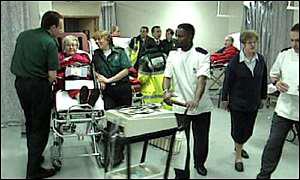 The NHS is short of staff
Despite success stories like Belen Carsi - a Spanish orthopaedic surgeon poached from Madrid and now running her own team at Hartlepool General Hospital - the NHS continues to struggle to fill posts. The headlines might tell us otherwise. A recent audit commission report pointed out that the number of doctors working the NHS has increased by 44% in the past ten years.
Without wishing to spoil the warm glow that emanates from a pile of favourable press cuttings, ministers have an almost impossible task on their hands. They are aiming at what is essentially a moving target - an ever expanding NHS with increased patient demands fuelled by higher expectations; constraints on the hours doctors can work; sicker patients who are being kept alive by improving medical technology and an aging health workforce. Plugging the gap The rationale for turning to our continental cousins for help health is that they plug the gap until home-grown talent can be trained. They bring with them experience, research skills and cultural diversity. But welcome as this may be, it is not a sustainable solution to the NHS' staffing problems. That will have to come from wholesale changes in the way we train healthcare workers here, and that inevitably requires time. But that process has begun. It takes three years to qualify as a nurse (a report by the Kings Fund claims a third of all nurse graduates aren't failing to go onto the register once their training is complete adding to the shortage) and it takes ten to train as a senior doctor.
Yet the results of the government's overseas recruitment drive look rather pathetic on paper. Its target is to recruit 1,000 doctors and 2,000 nurses by 2005 yet only 540 nurses and just 40 doctors have been taken on. If that rate continues (especially for the recruitment of doctors) it's hard to see how that pledge will be met. Granted, a fellowship scheme spearheaded by the eminent former heart surgeon Professor Sir Magdi Yacoub to take on more doctors, has yet to deliver, but it would have to be a resounding success to bump the numbers up sufficiently to meet the government's pledge. Compounding the problem is this. During the transition from old style health service to "modern and dependable health service" a lot is being asked of existing staff. Many are working harder than ever covering for absent colleagues and buckling down to meet tough performance targets; negotiations to secure a new consultant contract look decidedly shaky due to low morale - and as more new staff come in through the front door - many are leaving through the back. | | See also:  15 May 02 | Health 22 Apr 02 | Health 04 Feb 02 | England 03 Sep 02 | Health Internet links: The BBC is not responsible for the content of external internet sites Top Health stories now: Links to more Health stories are at the foot of the page. | |||||||||||||||||||||||||||||||||||||||||||||||||||||||||||||||||||||||||||||||||||||||||||||||||||||||||||||||||||||||||||||||||||||||||||||||||
| |
|  E-mail this story to a friend E-mail this story to a friend |
| |
| Links to more Health stories |
| | | ||
 | ||||
 | | Back to top
| ||
| ---------------------------------------------------------------------------------- To BBC Sport>> | To BBC Weather>> | To BBC World Service>> ---------------------------------------------------------------------------------- © MMIII | News Sources | Privacy |






