
|
 |
 | | | | | | ||||||||||||||||||||||||||||||||||||||||||||||||||||||||||||||||||||||||||||||||||||||||||||||||||||||||||||||||||||||||||||||||||||||||
| | | You are in: Health | ||||||||||||||||||||||||||||||||||||||||||||||||||||||||||||||||||||||||||||||||||||||||||||||||||||||||||||||||||||||||||||||||||||||||||
|
| | Wednesday, 4 September, 2002, 18:04 GMT 19:04 UK Insulin smoke signals breakthrough 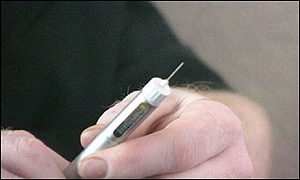 Diabetics currently have to inject insulin A process which renders insulin as fine as smoke could help diabetics. The technology has been developed by researchers at Eiffel Technologies of Melbourne. Diabetes experts say it could help in the quest to deliver insulin through skin patches or inhalers instead of via injections.
A gas is put under extremely high pressure so that it becomes "supercritical" and behaves like a liquid. Normal insulin is then dissolved in this liquid before it is suddenly decompressed, creating insulin particles which measure less than 100 nanometres across. One nanometre is one billionth of a metre. Conventional milling or grinding cannot produce particles smaller than between one and two micrometres. Fewer injections Researchers from Deakin University near Melbourne, Australia say tests on rats have shown the technology could also mean people need to take a third as much insulin as they do with when it is in its conventional form. In the tests, 0.15 units per kilogram of body weight produced the same response as 0.5 units of normal insulin. The new form of insulin also appeared to last longer. The researchers said compared to the effects of a normal insulin injection, which can start to fade after 30 minutes, the nanomised insulin continued to act strongly for 60 minutes. That could mean diabetics would need fewer injections each day. Paul Zimmet, director of the International Diabetes Institute at Monash University in Melbourne, reviewed the Deakin research for Eiffel. He said the reason nanomised insulin was more efficient could be because it delivers it in a more accessible way. Insulin molecules normally cluster together in a "six-pack" configuration, which the body has to convert to the single, or monomer, form. Mr Zimmet said these smaller particles may deliver the insulin in the more accessible monomer form. Patches Eleanor Kennedy, research grants manager, of Diabetes UK, told BBC News Online: "We are interested in the results of the research in Australia to nanomise insulin. "This could have important implications for new delivery methods for insulin such as inhalers and patches which are already being investigated. "This research is in the very early stages and we look forward to seeing the results of further work." The work is featured in the magazine New Scientist. | | See also:  27 Aug 02 | Health 22 Aug 02 | Health 17 Jul 02 | Health 02 Feb 01 | Health 11 Apr 01 | Scotland Internet links: The BBC is not responsible for the content of external internet sites Top Health stories now: Links to more Health stories are at the foot of the page. | ||||||||||||||||||||||||||||||||||||||||||||||||||||||||||||||||||||||||||||||||||||||||||||||||||||||||||||||||||||||||||||||||||||||||
| |
|  E-mail this story to a friend E-mail this story to a friend |
| |
| Links to more Health stories |
| | | ||
 | ||||
 | | Back to top
| ||
| ---------------------------------------------------------------------------------- To BBC Sport>> | To BBC Weather>> | To BBC World Service>> ---------------------------------------------------------------------------------- © MMIII | News Sources | Privacy |





