
|
 |
 | | | | | | ||||||||||||||||||||||||||||||||||||||||||||||||||||||||||||||||||||||||||||||||||||||||||||||||||||||||||||||||||||||||||||||||||||||||
| | | You are in: Health | ||||||||||||||||||||||||||||||||||||||||||||||||||||||||||||||||||||||||||||||||||||||||||||||||||||||||||||||||||||||||||||||||||||||||||
|
| | Monday, 2 September, 2002, 10:32 GMT 11:32 UK Go-ahead for miscarriage tests 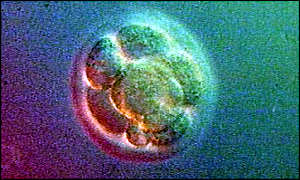 A single cell can be taken from the early embryo Two clinics have been licensed to offer tests which may help women who are prone to miscarriage after IVF. Doctors say this allows them to spot embryos which have no chance of developing into a baby - but some groups say the same technology could be used to remove the chance of a Down's syndrome baby. In older patients, up to 70% of embryos created during IVF have chromosomal abnormalities that will prevent them developing normally. These will either never implant in the womb in the first place, or miscarry shortly afterwards. As a result, older women both find it more difficult to become pregnant, and have a much higher miscarriage rate. Aneuploidy screening uses a single cell from each embryo created during IVF.
The Human Fertilisation and Embryology Authority has given licences to two clinics - CARE in the Park in Nottingham, and the Assisted Reproduction and Gynaecology Centre in London. Three types of patient will be eligible - older women, those who are prone to miscarriage after IVF and women who repeatedly fail to conceive after embryos are transferred. Down's fear Dr Simon Fishel, from CARE in the Park, told the BBC: "It's about preventing wastage. "We want to select those embryos which have a chance of getting through the pregnancy process." However, chromosomal analysis of a single cell could in theory be used to spot the extra chromosome which is a sign of Down's syndrome. Disabled groups are concerned that, while the current licences do not allow this, in future the technique could be used by parents looking for a more physically "perfect" baby. Even the editor of the Bulletin of Medical Ethics, Dr Richard Nicholson, has expressed his disquiet at the proposal. However, Suzi Leather, the chairman of the HFEA, denied that the aim was to produced so-called "designer babies". She said: "It's about trying to avoid chromosomal abnormalities and also, importantly, the emotional and physical distress of miscarriage." | | See also:  29 Aug 02 | Health 30 Aug 02 | Health 28 Aug 02 | Health Internet links: The BBC is not responsible for the content of external internet sites Top Health stories now: Links to more Health stories are at the foot of the page. | ||||||||||||||||||||||||||||||||||||||||||||||||||||||||||||||||||||||||||||||||||||||||||||||||||||||||||||||||||||||||||||||||||||||||
| |
|  E-mail this story to a friend E-mail this story to a friend |
| |
| Links to more Health stories |
| | | ||
 | ||||
 | | Back to top
| ||
| ---------------------------------------------------------------------------------- To BBC Sport>> | To BBC Weather>> | To BBC World Service>> ---------------------------------------------------------------------------------- © MMIII | News Sources | Privacy |





