
|
 |
 | | | | | | ||||||||||||||||||||||||||||||||||||||||||||||||||||||||||||||||||||||||||||||||||||||||||||||||||||||||||||||||||||||||||||||||||||||||
| | | You are in: Health | ||||||||||||||||||||||||||||||||||||||||||||||||||||||||||||||||||||||||||||||||||||||||||||||||||||||||||||||||||||||||||||||||||||||||||
|
| | Monday, 2 September, 2002, 23:18 GMT 00:18 UK Hospitals 'unready' for chemical alert 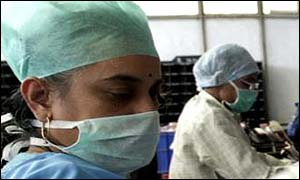 Safety procedures are vital A 2001 survey has claimed most UK hospitals were not equipped to deal with serious chemical incidents - though things may have improved in recent months. The survey pre-dated the events of September 11th, and experts say the situation has improved significantly since then. Researchers in Oxford found that despite clear NHS guidance, more than 90% of A&E departments did not have a proper range of specialist equipment and safety measures in place. In fact, they found major inconsistencies in the range of equipment held. Writing in the Emergency Medicine Journal, the researchers said it was self-evident that the current situation was unsafe. "Rapid intervention is essential in order to limit damage by chemicals and poisons," the researchers wrote. "Unfortunately, severe pressure on resources, together with the rarity of chemical incidents, seem to have resulted in a lack of facilities and equipment generally." The researchers sent a questionnaire to the senior nurse manager of every major accident and emergency department in the UK. A total of 227 questionnaires from 261 departments were returned. The findings revealed:
But only five (2%) departments had satisfactory premises and equipment to treat "stretcher" patients, full protection for staff, and at least three of four antidotes. No department scored full marks on the questionnaire although a few lacked only one item. National standards The researchers say a national agreement is needed to standardise A&E readiness for a chemical incident, and that measures should be introduced to ensure that all trusts comply.
Ideally, units should set aside a well ventilated area, with a separate "dirty" entrance and "clean" exits so that patients can pass through the area without crossing their tracks. A warm shower or hose is essential for decontamination as this is the best way to dilute contaminants as quickly as possible. A decontamination trolley - a shallow bath with a water drainage system - is required for showering any patient not well enough to stand. Staff should be provided with anti-chemical suits, waterproof boots, gloves, goggles and breathing apparatus. The researchers, from Oxford Radcliffe Hospitals NHS Trust, launched the study after discovering their own equipment was less than ideal when they tried to decontaminate patients after a cyanide incident. Improvements Professor John Henry, of the Academic Department of Accident and Emergency Medicine at St Mary's Hospital, Paddington, told BBC News Online: "This survey which was done before September 11th last year shows a patchy preparedness for chemical contamination incidents. "People then were thinking in terms of the occasional very rare case of cyanide poisoning. "The possibility of multiple casualties was not foreseen by most doctors, but things have now changed." During the last year, the Department of Health has set aside money in case of future events, and many A&E departments have improved their plans, while some are still making changes and getting the equipment needed. "It would be really interesting to see how a similar survey would look if carried out today." A Department of Health spokesperson agreed the survey was no longer representative of the current position. She said �5m was made available this year to ensure trusts had up-to-date personal protective equipment and decontamination units. "The NHS responds to chemical incidents on a regular basis and all A&E departments have major incident plans which are reviewed and tested regularly. "Supplies of drugs and equipment have been stored around the country to ensure that they can be obtained quickly in the event of an emergency." | |   See also: 23 Apr 02 | Health 24 Feb 00 | Health 25 Oct 01 | Health Internet links: The BBC is not responsible for the content of external internet sites Top Health stories now: Links to more Health stories are at the foot of the page. | ||||||||||||||||||||||||||||||||||||||||||||||||||||||||||||||||||||||||||||||||||||||||||||||||||||||||||||||||||||||||||||||||||||||||
| |
|  E-mail this story to a friend E-mail this story to a friend |
| |
| Links to more Health stories |
| | | ||
 | ||||
 | | Back to top
| ||
| ---------------------------------------------------------------------------------- To BBC Sport>> | To BBC Weather>> | To BBC World Service>> ---------------------------------------------------------------------------------- © MMIII | News Sources | Privacy |





