
|
 |
 | | | | | | ||||||||||||||||||||||||||||||||||||||||||||||||||||||||||||||||||||||||||||||||||||||||||||||||||||||||||||||||||||||||||||||||||||||||
| | | You are in: Health | ||||||||||||||||||||||||||||||||||||||||||||||||||||||||||||||||||||||||||||||||||||||||||||||||||||||||||||||||||||||||||||||||||||||||||
|
| | Tuesday, 20 August, 2002, 23:34 GMT 00:34 UK 'Mutant' head lice treatment hope 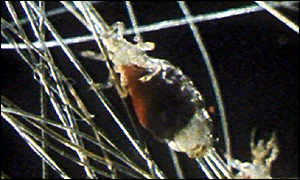 Mutant head lice are a growing problem Scientists believe they are closer to finding a way to stop the spread of treatment-resistant head lice. Researchers in the United States say they have found a way to carry out large-scale studies by growing colonies of mutated lice. They say this will enable them to examine the molecular make-up of lice and study how they become resistant to treatments.
The most common treatments for head lice use permethrin. But recent studies have shown that resistance to this chemical is as high as 50% in some Los Angeles schools. Among one group of migrant workers living in Florida resistance was 98%. But researchers at the University of Massachusetts hope their lice colony will help to stamp out this resistance. They have created a controlled environment in the laboratory which enables the lice to breed. Normally, lice can only survive if they are in hair or on the skin. But the Massachusetts researchers have been able to trick the lice into thinking that they are on hair. "We have a membrane and automatic blood feeding system that allows us to rear these things on little hair tufts," said Professor John Clark, one of those involved in the project. "We just cut little hair tufts and make tepees out of them and the head lice kind of sit on this membrane and think they're on a scalp and they wander down and take a blood meal and then go back up." Professor Clark said it was vital that scientists started to tackle the spread of treatment-resistant head lice. He said: "The longevity of effective control provided by permethrin is in serious jeopardy unless effective monitoring of this resistance is begun and coupled with the use of new and novel acting [treatments]." Professor Clark suggested that the misuse of remedies containing permethrin was to blame for the rise in treatment-resistant head lice. "I and a lot of other people who study resistance believe that it's the misuse of these over-the-counter products that have been the real problem in terms of selecting resistance." | | See also:  03 Sep 01 | Health 05 Sep 00 | Health 21 Jun 00 | Health Internet links: The BBC is not responsible for the content of external internet sites Top Health stories now: Links to more Health stories are at the foot of the page. | ||||||||||||||||||||||||||||||||||||||||||||||||||||||||||||||||||||||||||||||||||||||||||||||||||||||||||||||||||||||||||||||||||||||||
| |
|  E-mail this story to a friend E-mail this story to a friend |
| |
| Links to more Health stories |
| | | ||
 | ||||
 | | Back to top
| ||
| ---------------------------------------------------------------------------------- To BBC Sport>> | To BBC Weather>> | To BBC World Service>> ---------------------------------------------------------------------------------- © MMIII | News Sources | Privacy |





