
|
 |
 | | | | | | ||||||||||||||||||||||||||||||||||||||||||||||||||||||||||||||||||||||||||||||||||||||||||||||||||||||||||||||||||||||||||||||||||||||||||||||||||||||||||||||||||||||||||||||
| | | You are in: Health | ||||||||||||||||||||||||||||||||||||||||||||||||||||||||||||||||||||||||||||||||||||||||||||||||||||||||||||||||||||||||||||||||||||||||||||||||||||||||||||||||||||||||||||||||
|
| | Tuesday, 20 August, 2002, 02:46 GMT 03:46 UK Doctors call for patient 'fines' 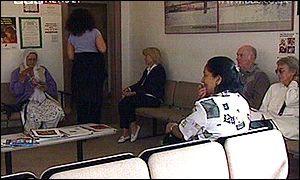 Patients who don't show up cause delays The majority of GPs favour charging patients who fail to turn up for appointments, a survey suggests. Most of those questioned believed young people were those most likely not to make the effort. The government is reportedly thinking about introducing non-attendance "fines" as one way of cutting missed appointments, although this has not been confirmed officially. The survey, carried out on behalf of the Doctor Patient Partnership, questioned doctors at 577 GP practices across the UK. Doctors already complain that too many patients are crammed into their morning and evening surgery hours. This means that on average, each gets only a few minutes of the GP's time. There are many practices at which patients calling to book appointments are told that the first non-urgent slot is more than two days away. This delay is compounded when other patients fail to turn up for their appointments. Millions missed In the UK each year, more than 15 million appointments are thought to be missed, as well as more than four million practice nurse appointments. The survey found that 58% of GPs questioned said they would support the idea of charging patients for missed appointments. Three-quarters said they believed a drop in missed appointments would translate to shorter waiting times for their patients. The Doctor Patient Partnership is launching its "Keep it or Cancel it" campaign for 2002 this week. 'Disruptive' This is being backed by the Department of Health. Health minister John Hutton said: "We all have a responsibility to ensure that we use health resources fairly and appropriately. "Missed appointments are wasteful and disruptive." The government has set an ambitious target for a maximum 48-hour wait for GP appointments by 2004. The survey found that most doctors picked out the 16 to 34 year age group as those most likely to miss an appointment. In total 67% of those GPs questioned felt this age group were mostly to blame. However Stuart Marples of the Institute of Healthcare Management, which is also backing the scheme, said that it might be that younger people were having more trouble fitting appointments in with their working lives. | |
See also:  31 May 02 | Health 30 Apr 02 | Health 10 Apr 02 | Health Internet links: The BBC is not responsible for the content of external internet sites Top Health stories now: Links to more Health stories are at the foot of the page. | ||||||||||||||||||||||||||||||||||||||||||||||||||||||||||||||||||||||||||||||||||||||||||||||||||||||||||||||||||||||||||||||||||||||||||||||||||||||||||||||||||||||||||||||
| |
|  E-mail this story to a friend E-mail this story to a friend |
| |
| Links to more Health stories |
| | | ||
 | ||||
 | | Back to top
| ||
| ---------------------------------------------------------------------------------- To BBC Sport>> | To BBC Weather>> | To BBC World Service>> ---------------------------------------------------------------------------------- © MMIII | News Sources | Privacy |






