
|
 |
 | | | | | | ||||||||||||||||||||||||||||||||||||||||||||||||||||||||||||||||||||||||||||||||||||||||||||||||||||||||||||||||||||||||||||||||||||||||||||||||||||||||||||||||||||||||
| | | You are in: Health | ||||||||||||||||||||||||||||||||||||||||||||||||||||||||||||||||||||||||||||||||||||||||||||||||||||||||||||||||||||||||||||||||||||||||||||||||||||||||||||||||||||||||||
|
| | Wednesday, 14 August, 2002, 18:02 GMT 19:02 UK Secrets of keeping coffee's kick 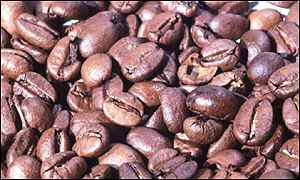 Some people need regular coffee "fixes" Does one cup of coffee keep you on a high all day? It's possible your genes are responsible, according to researchers. Swedish researchers have discovered a protein in the brain which appears to prevent the effects wearing off. Differing levels of this could explain how a cup of coffee can keep some people buzzing for hours whereas others need another fix far more quickly.
The research, published in the journal Nature, focuses on a protein called DARPP-32. Brain activity When this protein is combined with small doses of caffeine, it helps reduce the amount of other brain chemicals which would inhibit excess nerve activity. The caffeine/protein combination also subdues a protein called kinase A, whose job it is to stop DARPP-32 working. The net effect is a circular one, with the combination working to effectively knock down various mechanisms designed to end the caffeine "buzz". This means it keeps on going for much longer than might be expected for a chemical having such a pronounced effect on brain activity. Dr Jean Marie Vaugeois, from the University of Rouen, said: "DARPP-32 keeps us going until the next coffee break by extending the effects of the last cup. "This knowledge should provide an even better understanding of caffeine's effects." It now remains to be seen whether different people can be found to have different levels of DARPP-32 in their brain, perhaps because of genetic differences. Certainly, mice genetically engineered to lack the protein were immune to the stimulatory effects of the drug. There are already clues that some people appear to metabolise caffeine far more slowly than others. A research project at Newcastle University looking comparing poor sleepers with good sleepers found that, despite drinking the same amount of coffee, the poor sleepers were unable to metabolise caffeine out of their systems at anything like the same rate as the good sleeping group. Professor Heather Ashton, who led that study, told BBC News Online: "Although the brain waves of poor sleepers showed definite signs of sleep deprivation, they tended to be more neurotic and excitable." | |
See also:  26 Jun 02 | Science/Nature 13 May 02 | Health 18 Apr 02 | Health 25 Mar 02 | Health Internet links: The BBC is not responsible for the content of external internet sites Top Health stories now: Links to more Health stories are at the foot of the page. | ||||||||||||||||||||||||||||||||||||||||||||||||||||||||||||||||||||||||||||||||||||||||||||||||||||||||||||||||||||||||||||||||||||||||||||||||||||||||||||||||||||||||
| |
|  E-mail this story to a friend E-mail this story to a friend |
| |
| Links to more Health stories |
| | | ||
 | ||||
 | | Back to top
| ||
| ---------------------------------------------------------------------------------- To BBC Sport>> | To BBC Weather>> | To BBC World Service>> ---------------------------------------------------------------------------------- © MMIII | News Sources | Privacy |






