
|
 |
 | | | | | | ||||||||||||||||||||||||||||||||||||||||||||||||||||||||||||||||||||||||||||||||||||||||||||||||||||||||||||||||||||||||||||||||||||||
| | | You are in: Health | ||||||||||||||||||||||||||||||||||||||||||||||||||||||||||||||||||||||||||||||||||||||||||||||||||||||||||||||||||||||||||||||||||||||||
|
| | Sunday, 25 August, 2002, 23:06 GMT 00:06 UK DNA damage in infertile men's sperm 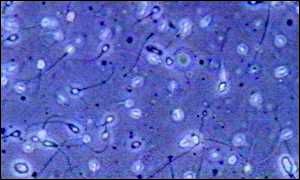 Sperm may contain hidden DNA damage The sperm of infertile men may look and behave normally, but have hidden genetic damage that could stop them producing a child. Approximately half of all infertility is thought to be due to problems on the man's side. However, the precise mechanism of many of these cases remains unexplained. A team of researchers from Cleveland, Ohio in the US looked at the sperm of 92 men undergoing fertility treatment and compared it with the sperm of 16 fertile men. Many of the infertile men had obviously defective sperm, either abnormal-looking or unable to swim normally. However, 25% of the infertile men had normal-looking sperm. All the sperm were genetically tested to look for signs of damaged DNA in their genetic structure. DNA problems As expected, the abnormal sperm had a high rate of DNA damage. But just under half the men with normal-appearing sperm also had signs of this damage. The finding is a concern because of pre-existing fears that a particular fertility technique might be passing genetic defects from infertile fathers to their children. Normal in-vitro fertilisation (IVF) involves simply putting millions of sperm and a number of eggs in a dish together and hoping the sperm will perform their usual function of swimming up to the egg, penetrating its surface and triggering cell division into an embryo. However, where sperm are few, or poor swimmers, or where IVF has failed to work, a technique called intra-cytoplasmic sperm injection (Icsi) is used. In this, a single sperm is selected by lab workers and physically injected into the egg. Defects Studies have suggested a higher rate of infertility-linked birth defects among Icsi-conceived babies, and there are concerns that babies born under these circumstances will be more likely to be infertile themselves. There are also concerns that Icsi babies might be more prone to cancer - but there is no study evidence so far to back this up. The latest research supports those fears, by highlighting the high level of DNA damage in the sperm. Dr Ramadan Saleh, who authored the paper in the journal Fertility and Sterility, said: "Icsi is the technique used primarily for the treatment of infertile men with very poor sperm quality. "The use of DNA-damaged sperm to fertilise the egg may have adverse consequences such as fertilisation failure, early embryo death, miscarriage, childhood cancer and infertility in the offspring." He suggested that infertile men might be better spotted using DNA damage analysis of their sperm rather than simply examining its physical appearance. | | See also:  31 Mar 99 | Medical notes 01 Jul 02 | Health 02 Jul 02 | Health 01 Jul 02 | Health Internet links: The BBC is not responsible for the content of external internet sites Top Health stories now: Links to more Health stories are at the foot of the page. | ||||||||||||||||||||||||||||||||||||||||||||||||||||||||||||||||||||||||||||||||||||||||||||||||||||||||||||||||||||||||||||||||||||||
| |
|  E-mail this story to a friend E-mail this story to a friend |
| |
| Links to more Health stories |
| | | ||
 | ||||
 | | Back to top
| ||
| ---------------------------------------------------------------------------------- To BBC Sport>> | To BBC Weather>> | To BBC World Service>> ---------------------------------------------------------------------------------- © MMIII | News Sources | Privacy |



