
|
 |
 | | | | | | ||||||||||||||||||||||||||||||||||||||||||||||||||||||||||||||||||||||||||||||||||||||||||||||||||||||||||||||||||||||||||||||||||||||||
| | | You are in: Health | ||||||||||||||||||||||||||||||||||||||||||||||||||||||||||||||||||||||||||||||||||||||||||||||||||||||||||||||||||||||||||||||||||||||||||
|
| | Wednesday, 14 August, 2002, 23:51 GMT 00:51 UK Babies' thigh length 'predicts health' 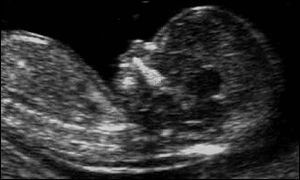 Babies were scanned in the womb Measuring the length of a baby's thigh bone in the womb is a strong indicator of subsequent childhood health, researchers say. The team, from the University of Western Australia, found those children who had had shorter thigh bones at 24 weeks were more likely to have high blood pressure as a child. The researchers say foetal thigh bone - femur - length could even be a predictor of adult blood pressure levels.
Just over 700 developing foetuses were scanned to measure the dimensions of their abdomen and head circumferences and the length of the femurs. They were scanned five times each between 18 and 38 weeks of pregnancy. Three hundred of the children then had their blood pressure measured when they were 6 years old. The lowest blood pressure readings were for children who had weighed most at birth, whose abdomens grew reasonably or very fast in the womb, and whose thigh bones were longest at 24 weeks. Birth weight link Those who had fallen within the longest 5% of femurs had up to 2mm Hg lower blood pressure. The study also confirmed that low birth weight is strongly associated with high blood pressure, which can lead to cardiovascular problems. The researchers say the importance of their findings lies in the fact that the effect of femur length at 24 weeks was in line with that of abdominal circumference. This is recognised as a strong marker of growth in mid to late pregnancy, because it reflects liver size and subcutaneous fat, which suggest how well nourished the mother and foetus are. But they say the findings suggest that "foetal programming" for childhood and adult health may start earlier in pregnancy and may not be related to maternal nutrition in later pregnancy as had previously been thought. Long-term consequences The researchers, led by Dr Kevin Blake, wrote in the Journal of Epidemiology and Community Health: "We have shown direct evidence that intrauterine growth is related to a subsequent health outcome." Kypros Nicolaides, professor of foetal medicine at King's College Hospital, London, told BBC News Online: "This provides further evidence that a hostile intrauterine environment cannot only lead to immediate problems like foetal death and distress. "But the babies that survive such a hostile environment are subject to long-term consequences like cardiovascular disease in adulthood." Professor Nicolaides said the study could help doctors differentiate between babies who were small for genetic reasons, and those who were developing in a hostile environment. "It makes the challenge of identifying such pregnancies early and developing strategies to improve the intrauterine environment more urgent." | | See also:  29 Oct 99 | Health 30 Jun 01 | Health 26 Feb 00 | Health 08 Jan 01 | Health 19 Apr 01 | Health Internet links: The BBC is not responsible for the content of external internet sites Top Health stories now: Links to more Health stories are at the foot of the page. | ||||||||||||||||||||||||||||||||||||||||||||||||||||||||||||||||||||||||||||||||||||||||||||||||||||||||||||||||||||||||||||||||||||||||
| |
|  E-mail this story to a friend E-mail this story to a friend |
| |
| Links to more Health stories |
| | | ||
 | ||||
 | | Back to top
| ||
| ---------------------------------------------------------------------------------- To BBC Sport>> | To BBC Weather>> | To BBC World Service>> ---------------------------------------------------------------------------------- © MMIII | News Sources | Privacy |





