
|
 |
 | | | | | | |||||||||||||||||||||||||||||||||||||||||||||||||||||||||||||||||||||||||||||||||||||||||||||||||||||||||||||||||||||||||||||||||||||||||||||||||||||||||||||||||||||||||||||||
| | | You are in: Health | |||||||||||||||||||||||||||||||||||||||||||||||||||||||||||||||||||||||||||||||||||||||||||||||||||||||||||||||||||||||||||||||||||||||||||||||||||||||||||||||||||||||||||||||||
|
| | Friday, 2 August, 2002, 18:06 GMT 19:06 UK Uganda hails HIV success 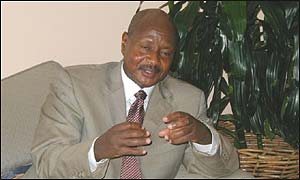 Mr Museveni has told his people they can die from HIV Public education has been Uganda's secret weapon against Aids, according to the country's president. Yoweri Kaguta Museveni said officials had managed to halt the spread of the disease by simply telling people that they will die if they contract HIV. Official figures published in July show 5% of the Ugandan population has HIV, down from 8% in 1999. It is the first African country to have reversed the spread of the disease.
President Museveni said he has tried to boost public awareness of the disease since first coming to power in 1986. "I could not take chances with a disease which we had no knowledge of," he told the BBC World Service. "It had no vaccine but it was easily prevented. That is why we went for the prevention and awareness solution."
"When I had a chance, I would shout at them," he said. "[I used to say] 'you are going to die if you don't stop this. You are going to die'." Dr Frances Omaswa, director of health services at Uganda's Ministry of Health, added: "The first step was acknowledging there was a problem by the political leadership. "Uganda was the first country in Africa to declare that it had a problem with HIV." The ministry also launched a major campaign to educate the public. Dr Omaswa said: "We had strong messages on radio, before every news item in every major language." Prevention remains Uganda's best weapon against HIV and Aids. The cost of anti-retroviral drugs have fallen in the past year but they remain relatively high. The overall cost of providing drug treatment to the 150,000 Ugandans with the disease would run to three and a half times the country's entire health budget. Dr Omaswa said efforts would continue to focus on preventing new infections. "We must avoid complacency. We must still push on prevention as hard as possible." This story is featured in the radio programme Health Matters on the BBC World Service. Click here for listening times | |
See also:  12 Jul 02 | Health 28 Jul 02 | Health 30 Aug 99 | Africa 01 Mar 01 | Africa Internet links: The BBC is not responsible for the content of external internet sites Top Health stories now: Links to more Health stories are at the foot of the page. | |||||||||||||||||||||||||||||||||||||||||||||||||||||||||||||||||||||||||||||||||||||||||||||||||||||||||||||||||||||||||||||||||||||||||||||||||||||||||||||||||||||||||||||||
| |
|  E-mail this story to a friend E-mail this story to a friend |
| |
| Links to more Health stories |
| | | ||
 | ||||
 | | Back to top
| ||
| ---------------------------------------------------------------------------------- To BBC Sport>> | To BBC Weather>> | To BBC World Service>> ---------------------------------------------------------------------------------- © MMIII | News Sources | Privacy |








