
|
 |
 | | | | | | ||||||||||||||||||||||||||||||||||||||||||||||||||||||||||||||||||||||||||||||||||||||||||||||||||||||||||||||||||||||||||||||||||||||||
| | | You are in: Health | ||||||||||||||||||||||||||||||||||||||||||||||||||||||||||||||||||||||||||||||||||||||||||||||||||||||||||||||||||||||||||||||||||||||||||
|
| | Friday, 2 August, 2002, 23:05 GMT 00:05 UK Device could reduce heart surgery danger 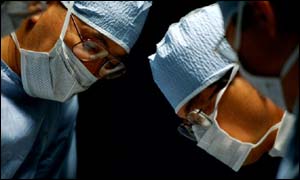 Heart surgery can lead to brain problems Tiny blood clots that form during heart operations, and could lodge in the brain, can now be spotted en route, say doctors. This could help protect patients from damage, they say. A team of Norwegian experts has used ultrasound to tell the difference between very small clumps of blood cells and less harmful gas bubbles as they move around the body.
While less than a full-blown stroke, it could affect, in a subtle way, the functioning of the brain after the operation. In fact, as many as half those who undergo a heart bypass operation suffer some type of cognitive decline, mostly a mild effect such as memory loss. The new technique means, in theory, that a surgeon could spot the clots on the move, and alter his technique to reduce the risk. The researchers, from the National Hospital in Oslo, used a technique called multifrequency transcranial Doppler ultrasound to look at what is going on in blood vessels. The device compares the signal bounced back using two difference frequencies of sound. Bigger bounce The key difference is that the solid clot reflects back more ultrasound signals at the higher frequency, while the bubble does this at the lower frequency. Its accuracy is such that it correctly identified almost 100% of both clots and bubbles in a laboratory setting. The study author, Professor David Russell, said the advance could improve safety for patients. He said: "In the past, we could detect something entering the arteries of the brain, but we could not tell if it was a very small gas bubble or blood clot. "It was like a policeman who could detect a speeding vehicle but didn't know whether it was a small car or a large truck. "We can now detect these small clots automatically when they come into the brain and the surgeon can change the technique to make it safer for the patient." Change technique Tens of thousands of people in the UK underwent heart bypass surgery last year. Professor Ken Taylor, from Hammersmith Hospital in London, said surgeons would take some convincing that an accurate way of spotting the difference had been developed. He said in addition to the microembolae and microbubbles of gas, the process of inserting tubes and clamping blood vessels near the heart often shook free tiny particles of debris from their walls which could travel to the brain and cause problems. But he said the ultrasound technique might prove useful in identifying patients at higher risk of cognitive problems after surgery. "If you have got a device that can detect particles going up the carotid arteries or into the cerebral arteries, you could perhaps change what you were doing." | | See also:  14 Jun 02 | Health 27 May 02 | Health 14 May 02 | Health 05 Apr 02 | Health Internet links: The BBC is not responsible for the content of external internet sites Top Health stories now: Links to more Health stories are at the foot of the page. | ||||||||||||||||||||||||||||||||||||||||||||||||||||||||||||||||||||||||||||||||||||||||||||||||||||||||||||||||||||||||||||||||||||||||
| |
|  E-mail this story to a friend E-mail this story to a friend |
| |
| Links to more Health stories |
| | | ||
 | ||||
 | | Back to top
| ||
| ---------------------------------------------------------------------------------- To BBC Sport>> | To BBC Weather>> | To BBC World Service>> ---------------------------------------------------------------------------------- © MMIII | News Sources | Privacy |





