
|
 |
 | | | | | | ||||||||||||||||||||||||||||||||||||||||||||||||||||||||||||||||||||||||||||||||||||||||||||||||||||||||||||||||||||||||||||||||||||||||
| | | You are in: Health | ||||||||||||||||||||||||||||||||||||||||||||||||||||||||||||||||||||||||||||||||||||||||||||||||||||||||||||||||||||||||||||||||||||||||||
|
| | Monday, 29 July, 2002, 23:15 GMT 00:15 UK Batting first is bad for bowlers 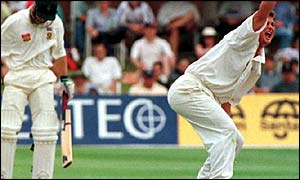 England's Darren Gough has suffered injury problems The risk of fast bowlers getting injured while playing cricket increases if their team bats first, researchers have found. Scientists in Australia have found that fast bowlers are at the greatest risk of injury of all cricketers. However, their risk of injury seems to be increased if they spend the first part of the match in the pavilion watching their colleagues bat.
The researchers, from the Department of Sports Medicine at Sydney University, found for every 20 matches played, a squad of 25 players could expect to pick up 19.2 injuries. The highest injury rate was found among players taking part in one day internationals. The most common types of injuries were hamstring strains, side strains and injuries to the groin, wrists, hands, and soft tissue back injuries. Fast bowlers were significantly more likely to be injured than any other player and the faster they were, the more at risk they seemed to be. Fourteen per cent of them were injured at any one time compared with 4% of spin bowlers, 4% of batsmen, and 2% of wicket keepers. Quicks Bowlers who bowled more than 20 match overs in the week preceding a match almost doubled their risk of injury. But surprisingly bowling second after batting first increased the injury risk by over 60%. The researchers also found that a relatively high injury toll occurred as a result of players colliding with the boundary fence while fielding. Boundary ropes were introduced at all Australian venues in the final year of the study, which seemed to reduce this route of injury. Eleven injuries were also sustained, some of them serious, during football activities, which are part of cross training drills. The researchers say there is as yet no obvious explanation as to why bowlers are more likely to be injured when their team bowls second in a match. Warm up But they suggest that before the start of the first innings, bowlers warm up in the nets. However, in subsequent innings they may be more likely to start bowling immediately after batting. Researcher Dr John Orchard said: "The fast bowler bowling first can warm-up before the start of the match. "But for other innings the bowler usually can't warm-up properly both because the time of change of innings is not easy to predict. "Also because the bowler may often be required as a batsman. "Further research needs to be done to determine whether having a designated warm-up period for bowlers may help reduce injuries, and this is the most likely way that injuries could be prevented in the future." The research is published in the British Journal of Sports Medicine. | | See also:  06 Mar 02 | Health 26 Mar 01 | Health 25 Jan 01 | Health Internet links: The BBC is not responsible for the content of external internet sites Top Health stories now: Links to more Health stories are at the foot of the page. | ||||||||||||||||||||||||||||||||||||||||||||||||||||||||||||||||||||||||||||||||||||||||||||||||||||||||||||||||||||||||||||||||||||||||
| |
|  E-mail this story to a friend E-mail this story to a friend |
| |
| Links to more Health stories |
| | | ||
 | ||||
 | | Back to top
| ||
| ---------------------------------------------------------------------------------- To BBC Sport>> | To BBC Weather>> | To BBC World Service>> ---------------------------------------------------------------------------------- © MMIII | News Sources | Privacy |





