
|
 |
 | | | | | | ||||||||||||||||||||||||||||||||||||||||||||||||||||||||||||||||||||||||||||||||||||||||||||||||||||||||||||||||||||||||||||||||||||||||
| | | You are in: Health | ||||||||||||||||||||||||||||||||||||||||||||||||||||||||||||||||||||||||||||||||||||||||||||||||||||||||||||||||||||||||||||||||||||||||||
|
| | Friday, 26 July, 2002, 23:00 GMT 00:00 UK Cunning bug fools stomach defences 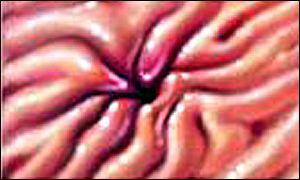 H pylori can cause stomach ulceration A stomach bacteria linked with cancer actually harnesses a crucial defence mechanism to help it survive in the human gut, say researchers. The finding, published in the journal Science, could point the way to new targets for future vaccines. Helicobacter pylori contributes to the formation of the vast majority of gastric ulcers in humans.
It is likely the relationship between the bug and humans has developed over millions of years, with each adapting new ways to either attack it or counter those attacks. The latest twist to this battle was revealed by researchers at Washington University School of Medicine in the US. They found that H pylori appears able to latch onto a sugar molecule produced by the wall of the stomach in response to its attack. The role of the sugar is to attract the attention of immune cells so they can hopefully destroy the bacterial Grabbing hold of this draws the bacterium closer to its target - perhaps allowing it to get more nutrients. Patrols However, this tends to lead to a greater immune response as the presence of the bacteria causes more of this sugar signal to be released. Normally this might lead to the bacteria being wiped out, but H pylori has also acquired the ability to break away and "hide" in nearby stomach mucus until the immune response fades away. This means that people cannot eradicate the bug, and have long-lasting infection, which eventually contributes to ulcer development. Thomas Boren, assistant professor of oral microbiology at UmeA University in Sweden, collaborated on the project. He said: "The ability of H pylori to adjust its adherence properties to the level of inflammation it causes at the stomach surface could help explain how this bacterium maintains its persistent, decades-long infection in the stomachs of millions worldwide." Vaccine hopes This ability of the bacterium to grip the sugar molecule could open new avenues for a vaccine, scientists believe. These could be targeted at the proteins on the surface of the bug that lock onto the sugar. Dr Peter Jenks, a clinical research fellow from the University of Nottingham, told BBC News Online that the study revealed more about the way the bacteria interacted with its human host. He said: "There's evidence that H pylori can become less aggressive, cause less inflammation, which is one of the factors which may allow it to persist. "We know it causes between 90% or 95% of duodenal ulcer, about 70% of gastric ulcer, and there is an association with stomach cancer." Currently, the best tactic to treat H pylori colonisation is with a combination of three drugs, including two antibiotics, to eradicate it from the stomach. This is successful in the majority of cases. | | See also:  08 Jan 02 | Health 16 Jan 02 | Health 22 Jul 02 | Health 26 Apr 02 | Health Top Health stories now: Links to more Health stories are at the foot of the page. | ||||||||||||||||||||||||||||||||||||||||||||||||||||||||||||||||||||||||||||||||||||||||||||||||||||||||||||||||||||||||||||||||||||||||
| |
|  E-mail this story to a friend E-mail this story to a friend |
| |
| Links to more Health stories |
| | | ||
 | ||||
 | | Back to top
| ||
| ---------------------------------------------------------------------------------- To BBC Sport>> | To BBC Weather>> | To BBC World Service>> ---------------------------------------------------------------------------------- © MMIII | News Sources | Privacy |





