
|
 |
 | | | | | | ||||||||||||||||||||||||||||||||||||||||||||||||||||||||||||||||||||||||||||||||||||||||||||||||||||||||||||||||||||||||||||||||||||||||
| | | You are in: Health | ||||||||||||||||||||||||||||||||||||||||||||||||||||||||||||||||||||||||||||||||||||||||||||||||||||||||||||||||||||||||||||||||||||||||||
|
| | Friday, 26 July, 2002, 17:54 GMT 18:54 UK Gene clue to nervous system damage 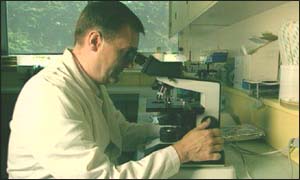 The scientists believe gene mutations play a key role British doctors believe they may have found a way of helping patients with conditions which seriously damage their nervous system. Doctors at St George's Hospital Medical School in South London have identified a gene which they believe plays a key role in certain neuro-degenerative disorders. These include patients with hereditary spastic paraplegia (HSP), which can cause people to lose the use of their legs and suffer from muscle spasms.
Dr Andrew Crosby and colleagues examined the genetic make-up of a particular form of HSP called Troyer syndrome. Mutated genes They found that patients with this condition had mutations in a key gene called Spartin. This gene, which plays an important role in transporting proteins in the body's cells helping them to function, is said to contain a 'novel functional domain'. This function is also found in other genes, including the gene Spastin. This gene is mutated in about a third of certain HSP cases. The British doctors believe that mutations in these types of genes can cause HSP. They have suggested that these mutations cause these genes to effectively block off paths within the cells, through which the proteins would normally travel. They added that since the motor and sensory neurones of the spinal cord are the longest cells in the body they are at highest risk of damage. Writing in the journal Nature Genetics, the authors said that if these cells are blocked it could cause the paralysis and weakness in the limbs associated with HSP. Effective treatment Dr Crosby said he hoped the finding could be used to develop an effective treatment for the condition. "In years to come, this information ultimately opens up the possibility of creating a treatment for this group of conditions." The condition is rare but can have a devastating effect on patients. In Europe, anywhere between one and nine people per 100,000 of the population are believed to have HSP. | | See also:  11 Jan 02 | Health 13 Nov 01 | Health 28 Jun 02 | Health Internet links: The BBC is not responsible for the content of external internet sites Top Health stories now: Links to more Health stories are at the foot of the page. | ||||||||||||||||||||||||||||||||||||||||||||||||||||||||||||||||||||||||||||||||||||||||||||||||||||||||||||||||||||||||||||||||||||||||
| |
|  E-mail this story to a friend E-mail this story to a friend |
| |
| Links to more Health stories |
| | | ||
 | ||||
 | | Back to top
| ||
| ---------------------------------------------------------------------------------- To BBC Sport>> | To BBC Weather>> | To BBC World Service>> ---------------------------------------------------------------------------------- © MMIII | News Sources | Privacy |





