
|
 |
 | | | | | | ||||||||||||||||||||||||||||||||||||||||||||||||||||||||||||||||||||||||||||||||||||||||||||||||||||||||||||||||||||||||||||||||||||||||||
| | | You are in: Health | ||||||||||||||||||||||||||||||||||||||||||||||||||||||||||||||||||||||||||||||||||||||||||||||||||||||||||||||||||||||||||||||||||||||||||||
|
| | Sunday, 21 July, 2002, 23:29 GMT 00:29 UK Multivitamins 'cut birth defect risk' 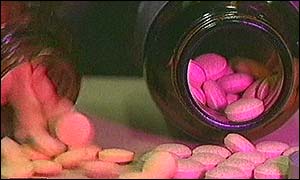 Vitamins may have a positive impact during pregnancy Women suffering maternal fever during pregnancy may be able to cut their risk of having a baby with a major heart, limb or facial defect by taking multivitamins, according to scientists. American researchers noticed that women who had an illness with fever during pregnancy had a higher risk of having a child with a major heart defect.
Br Botto and his team found that although the multivitamins did not cut the risk of fever, they did reduce complications such as heart defects, neural tube defects, cleft lip and palate, limb defects and a rare condition called omphalocele, where part of the intestine protrudes through the navel. They looked at over 2,000 pregnancies and outcomes, studying both live and stillbirths between 1968-1980, but excluded babies who had genetic defects. Folic acid Dr Botto, a paediatrician, said the multivitamins, if they also contained folic acid, could be used to half the risk of a baby being born with spina bifida. "Several previous reports had suggested that mothers who had a febrile illness during the first trimester had a higher risk for having a child with a major heart defect. "In our study, the findings suggested that in fact the risk was mostly confined to women who did not use multivitamins during the periconceptional period. "Mothers who reported a febrile illness but used multivitamins in that period were at no or little risk for having a child with heart defects." He said that he now wanted to see all women taking the tablets in the vital months before and during early pregnancy.
"I would recommend using a daily multivitamin containing folic acid from before conception through early pregnancy for reducing the risk for birth defects." Dr Botto said his team would be carrying out further studies on the benefits of multivitamins. He said it would be interesting to discover whether it is the fever or the infection that leads to the defects. Dr Botto said that if there were a particular fever thresh-hold that doctors might be able to reduce the risks by lowering it. Caution Dr Doris Campbell, a reader in Obstetrics and Gynaecology at Aberdeen University, said she would be wary of recommending multivitamins to pregnant women in the UK until the findings in the study had been replicated in a large trial. "In this country we do not recommend multi-vitamins. We recommend folic acid. "I know of no evidence that says multivitamin use is effective. We have got to be sure before we recommend something that it has been put through large trials. "And anyway as most women are wary of taking anything during pregnancy I would not like to suggest that women go off and use multivitamins." The research is published in the journal Epidemiology. | | See also:  19 Apr 99 | Health 05 Jul 02 | Health 18 Mar 02 | Health Internet links: The BBC is not responsible for the content of external internet sites Top Health stories now: Links to more Health stories are at the foot of the page. | ||||||||||||||||||||||||||||||||||||||||||||||||||||||||||||||||||||||||||||||||||||||||||||||||||||||||||||||||||||||||||||||||||||||||||
| |
|  E-mail this story to a friend E-mail this story to a friend |
| |
| Links to more Health stories |
| | | ||
 | ||||
 | | Back to top
| ||
| ---------------------------------------------------------------------------------- To BBC Sport>> | To BBC Weather>> | To BBC World Service>> ---------------------------------------------------------------------------------- © MMIII | News Sources | Privacy |





