
|
 |
 | | | | | | ||||||||||||||||||||||||||||||||||||||||||||||||||||||||||||||||||||||||||||||||||||||||||||||||||||||||||||||||||||||||||||||||||||||||
| | | You are in: Health | ||||||||||||||||||||||||||||||||||||||||||||||||||||||||||||||||||||||||||||||||||||||||||||||||||||||||||||||||||||||||||||||||||||||||||
|
| | Friday, 19 July, 2002, 23:25 GMT 00:25 UK Blood test for heart failure 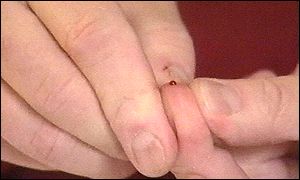 A spot of blood could be enough to indicate heart failure A simple blood test which could reveal heart failure in just 15 minutes has proved highly successful in clinical trials. It could mean that the problem could be picked up during a GP check-up and treatment given quickly. Doctors hope it will cut the number of people who wait until their symptoms have increased before going to casualty departments. However, the test is not yet available on the NHS - and there are calls for it to become standard practice. High accuracy The latest research, carried out in US, involved more than 1,000 patients arriving in emergency rooms with symptoms suggesting congestive heart failure, such as shortness of breath. Using just the blood test, doctors were able to spot heart failure in 83% of cases - and rule in out in 98% of cases where another condition was to blame. Combining the blood test results with other clinical symptoms led to a 90% success rate. The test works by looking for higher levels of a body chemical called B-type natriuretic peptide (BNP). Patients with heart failure tend to produce more of this chemical. Pump failure Congestive heart failure happens when the heart cannot pump enough blood to supply the body properly. As a result, it "backs up" in various parts of the body, mainly the liver, lungs, hands and feet, leading to symptoms such as swollen ankles and shortness of breath.
The standard test, used in the NHS, is an echocardiogram - an ultrasound assessment of the beating of the heart. Even in a casualty department, it may be hours before one can be carried out, and waits are far longer if the referral is made by a GP. Professor Allan Struthers, of Ninewells Hospital in Dundee, said that the aim was to use the test in GP surgeries so that high-risk patients could be prioritised for echocardiogram. He said: "The advantage for the patient is that those who are most likely to have a problem are selected more quickly and sent for echocardiogram. "I think it should be rolled out now in the NHS." | | See also:  09 Nov 99 | Health 16 Mar 02 | Health 17 Mar 02 | Health Internet links: The BBC is not responsible for the content of external internet sites Top Health stories now: Links to more Health stories are at the foot of the page. | ||||||||||||||||||||||||||||||||||||||||||||||||||||||||||||||||||||||||||||||||||||||||||||||||||||||||||||||||||||||||||||||||||||||||
| |
|  E-mail this story to a friend E-mail this story to a friend |
| |
| Links to more Health stories |
| | | ||
 | ||||
 | | Back to top
| ||
| ---------------------------------------------------------------------------------- To BBC Sport>> | To BBC Weather>> | To BBC World Service>> ---------------------------------------------------------------------------------- © MMIII | News Sources | Privacy |





