
|
 |
 | | | | | | ||||||||||||||||||||||||||||||||||||||||||||||||||||||||||||||||||||||||||||||||||||||||||||||||||||||||||||||||||||||||||||||||||||||||||
| | | You are in: Health | ||||||||||||||||||||||||||||||||||||||||||||||||||||||||||||||||||||||||||||||||||||||||||||||||||||||||||||||||||||||||||||||||||||||||||||
|
| | Friday, 12 July, 2002, 15:12 GMT 16:12 UK Drug hope for premature babies 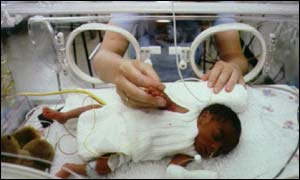 Many premature babies have breathing problems Scientists in the US have developed a drug which they believe could help premature babies with breathing problems to survive. Preliminary tests carried out at Duke University in North Carolina show the drug, called O-nitrosoethanol (ENO), can significantly boost the lungs. The drug helps to boost blood flow through the lungs ensuring oxygen is pumped around the body.
Dr Jonathan Stamler and colleagues tested ENO on seven newborn babies with high blood pressure in the lungs. Life-threatening This condition, which is known as persistent pulmonary hypertension, is potentially life-threatening. It puts pressure on the blood vessels in the lungs and limits the amount of oxygen been pumped through the body, or oxygenation. Writing in The Lancet, Dr Stamler said the drug improved oxygen levels in the babies' blood without any of the side-effects associated with other drugs. Dr Stamler described the results as "encouraging" but said larger trials were needed before the treatment could be made available more widely. Dr Ronald Goldberg, chief of neonatal-perinatal medicine at Duke University Medical Centre and co-author of the paper, said the drug could benefit other patients too. "While larger trials will need to be conducted to confirm the results, we are hopeful that this drug will not only help babies with persistent pulmonary hypertension, but can possibly play an important role in treating other disease of improper oxygenation, such as asthma and cystic fibrosis." Complication Persistent pulmonary hypertension occurs when a newborn baby's body does not respond properly after birth. Inside the womb, the foetus does not use its lungs to pump oxygen around the body through blood. Oxygenated blood comes directly from the mother through the umbilical cord. At birth, when the baby begins breathing air for the first time, this passage closes naturally and the baby's heart pumps blood to the lungs to pick up oxygen. However, if the arteries in the lungs are blocked or restricted then there may be problems. Clinical trial Laboratory tests on animals showed ENO could overcome these problems. The clinical trial at Duke University was approved by the US Food and Drug Administration. Dr Goldberg said the treatment was safer than current therapies.
He added: "We are the first neonatal intensive care unit to use this new drug and we are quite excited about it so far." The doctors are planning the undertake larger trials of the drug later this year. Dr Goldberg said: "Based on what we have seen so far, ENO has a great potential to help this group of very sick babies." Trials are also planned to see if the drug works with patients with asthma, cystic fibrosis and other lung diseases. Anne Greenough, professor of clinical respiratory physiology at Kings College London, said the findings were interesting but added that more work needed to be done. "Persistent pulmonary hypertension is an important and common problem in the newborn, many of the existing treatments have side-effects and a variable response. "This treatment looks interesting, but it is important to see the results of a randomised study." | | See also:  29 May 00 | Health 29 Jul 00 | Health 17 Feb 02 | Health Internet links: The BBC is not responsible for the content of external internet sites Top Health stories now: Links to more Health stories are at the foot of the page. | ||||||||||||||||||||||||||||||||||||||||||||||||||||||||||||||||||||||||||||||||||||||||||||||||||||||||||||||||||||||||||||||||||||||||||
| |
|  E-mail this story to a friend E-mail this story to a friend |
| |
| Links to more Health stories |
| | | ||
 | ||||
 | | Back to top
| ||
| ---------------------------------------------------------------------------------- To BBC Sport>> | To BBC Weather>> | To BBC World Service>> ---------------------------------------------------------------------------------- © MMIII | News Sources | Privacy |





