|
 |
 | | | | | | |||||||||||||||||||||||||||||||||||||||||||||||||||||||||||||||||||||||||||||||||||||||||||||||||||||||||||||||||||||||||||||||||||||||
| | | You are in: Health | |||||||||||||||||||||||||||||||||||||||||||||||||||||||||||||||||||||||||||||||||||||||||||||||||||||||||||||||||||||||||||||||||||||||||
|
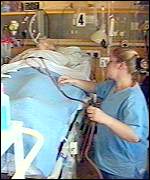
| | Wednesday, 26 June, 2002, 23:58 GMT 00:58 UK Seriously-ill 'at risk' in smaller hospitals Smaller hospitals may not have comprehensive facilities Many hospitals are not well enough equipped or staffed to deal with more vulnerable patients, according to a report issued on Thursday. The Royal College of Physicians (RCP) says that some "acutely ill" patients are being sent to the wrong hospitals, and is calling for the system to change. Major district general hospitals are set up to cope with seriously injured or ill patients. They not only have accident and emergency facilities, but also operating theatres, anaesthetists on call 24 hours a day and intensive care units. Many smaller hospitals - often "satellite" hospitals in bigger trusts - do not have all these - but are still often sent patients who may need them if their condition gets worse suddenly. Blood test Some did not have the ability to carry out chest x-rays, and in others, blood tests were sent away by taxi to a lab in another hospital. An investigation by the RCP found 59 which it says would be stretched to cope with every eventuality.
Certainly patients in the 59 appeared more likely to fare worse - suffering delays in diagnosis, perhaps needing to be transferred to another hospital or having to stay in hospital longer. Elderly risk Dr Henry Connor, who drew up the report, said: "Hospitals which do not have critical care facilities and adequate diagnostic services are not appropriate sites for the admission of acutely ill medical patients - who should be admitted to district general hospitals for prompt assessment, diagnosis and management. "Once a definite diagnosis has been established, the patient's condition stabilised and a management plan formulated, some of these patients will be suitable for transfer to hospitals which do not have the appropriate resources." The RCP calls these centres "isolated medical units", and says they should be downgraded. The problem is particularly severe for the elderly - many of the seriously-ill patients were admitted to geriatric wards in the satellite hospital. The RCP says this is at odds with the government's National Service Framework for the Elderly - a set of guidelines for elderly care. | | See also:  15 Oct 99 | Health 29 Jan 01 | Scotland 17 Oct 00 | Health Internet links: The BBC is not responsible for the content of external internet sites Top Health stories now: Links to more Health stories are at the foot of the page. | |||||||||||||||||||||||||||||||||||||||||||||||||||||||||||||||||||||||||||||||||||||||||||||||||||||||||||||||||||||||||||||||||||||||
| |
|  E-mail this story to a friend E-mail this story to a friend |
| |
| Links to more Health stories |
| | | ||
 | ||||
 | | Back to top
| ||
| ---------------------------------------------------------------------------------- To BBC Sport>> | To BBC Weather>> | To BBC World Service>> ---------------------------------------------------------------------------------- © MMIII | News Sources | Privacy |