|
 |
 | | | | | | |||||||||||||||||||||||||||||||||||||||||||||||||||||||||||||||||||||||||||||||||||||||||||||||||||||||||||||||||||||||||||||||||||||||||||||
| | | You are in: Health | |||||||||||||||||||||||||||||||||||||||||||||||||||||||||||||||||||||||||||||||||||||||||||||||||||||||||||||||||||||||||||||||||||||||||||||||
|
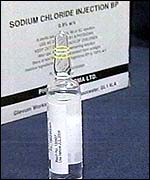
| | Tuesday, 18 June, 2002, 05:36 GMT 06:36 UK 'My mistake nearly killed a patient' Phil Hammond: Didn't report error A new study has suggested that hundreds of thousands of "adverse incidents" affect patients in the NHS every year. While some mistakes and accidents have trivial consequences, others end in the death of patients. Dr Phil Hammond, the presenter of the BBC series "Trust Me, I'm a Doctor," mistakenly administered the very drug health experts are on the verge of issuing a warning about. His mistake as a junior came a few millimetres from killing a patient. Dr Hammond was in his final year as a junior doctor, when, at 3am, he made the error. It involved two indentical looking liquids, contained in almost identical bottles. One was saline solution, the other potassium chloride. Saline is an everyday tool in the health service, used to dilute far more powerful medications like potassium chloride.
"I was called to see a woman at 3am, and was asked to give her a small amount of potassium in a drip. "I was tired, and I was too naive and not brave enough to ask for help." Instead of a bottle of saline, he picked up the almost identical bottle of potassium, and hooked it up to her drip. Fatal dose At that dose, the drug would have stopped the patient's heart within moments.
"Fortunately I was so incompetent that I hadn't even done that properly." Instead, the small amount of potassium which reached the small area around the needle caused intense pain to the patient. "I realised straight away, but I didn't admit what had happened, I made some fatuous comment that she must be allergic to saline. "It was a very near miss."
No-one told That wasn't the case then. "I didn't report it. There wasn't any error reporting system." He said that the climate of the times meant that doctors were too ashamed to own up to any error, and he told only a few friends.
And his mistake was no isolated incident. "Most doctors in training can remember situations where they either directly led to the demise of a patient or a very near miss, often through drug maladministration, with lots of drugs with very similar names, lots of similar bottles." "When you analyse it, it's exactly the same as pushing the wrong number into a cash machine, putting a video back in the wrong box. They are ordinary, everyday errors." He fully supports a move to a "no-blame" culture, which recognises that "good people can make bad mistakes", as this will help bring in changes to keep patients safer. "We shouldn't have to wait for a hundred deaths to change the colour of a bottle." | | See also:  17 Jun 02 | Health 17 Jun 02 | Health 17 Jun 02 | Health Internet links: The BBC is not responsible for the content of external internet sites Top Health stories now: Links to more Health stories are at the foot of the page. | |||||||||||||||||||||||||||||||||||||||||||||||||||||||||||||||||||||||||||||||||||||||||||||||||||||||||||||||||||||||||||||||||||||||||||||
| |
|  E-mail this story to a friend E-mail this story to a friend |
| |
| Links to more Health stories |
| | | ||
 | ||||
 | | Back to top
| ||
| ---------------------------------------------------------------------------------- To BBC Sport>> | To BBC Weather>> | To BBC World Service>> ---------------------------------------------------------------------------------- © MMIII | News Sources | Privacy |