
|
 |
 | | | | | ||||||||||||||||||
| | You are in: Health | ||||||||||||||||||||
 | | Thursday, 4 April, 2002, 00:07 GMT 01:07 UK 'Pressure tactics' shame stairlift firms 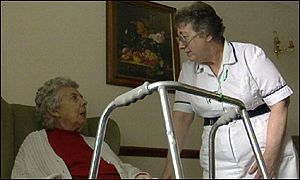 The aids are sold to people with mobility problems Elderly people are paying too much for the wrong mobility aids because firms are using high-pressure sales tactics, claims a report. Which? magazine looked at 62 complaints about mobility aids companies from readers, trading standards officers and disabled and elderly groups. It said that although the companies it investigated were not acting outside the law, many customers felt let-down or misled. Campaigners for the elderly said there were long-standing concerns about the selling of mobility aids. Over half of the complaints Which? considered were about Churchill's Stairlifts, which also trades under other names, including The Mobility Company.
"Whilst not all the facts have been represented in the [Which?] report, Churchill's Stairlifts recognises it has made mistakes in the past, and welcomes constructive criticism to allow opportunity to improve service to customers in what comes at a very difficult and emotional time of their lives" 'Let down' Frances Gorick, 91, was sold a Churchill's Stairlifts "rise and recline" chair that was too big for her room and posed a potential safety risk as the electrical wires were near water. After five months, the company took back the chair - but only refunded �2,210 of the �2,950 paid, costing Miss Gorick �740. The company said she had not decided where to put the chair, or cleared furniture and offered the compromise later agreed with the company. Some customers also felt the fine detail of cancellation fees were not explained to them before they signed on the dotted line. One lady was only able to recover part of her �800 deposit she had paid for a scooter from Churchill's. She cancelled the order because she felt the equipment was not appropriate due to her medical condition, but the company said it would keep �398.75 of the deposit "to cover costs incurred". Churchill's said although it was known at the time of sale her medical condition would not enable her to lift the scooter, she had said a friend would help her. Churchill's also came under fire for a perceived lack of clarity on how much money customers would receive if the company bought back stair lifts when they were no longer needed. The company said that in September 2000, it made improvements to its buy back document. Customers have to sign a declaration to say they have signed and understood the guarantee. A spokesman for Churchill's added: "Although we are not complacent, it is important to note that the number of complaints received by customers is very small compared to the many thousands of satisfied customers. "Following the report, Churchill's Stairlifts recognises the need to promptly attend customers where it is alleged that an inappropriate product has been sold, and has recently introduced new procedures to speed up this process. "In more serious cases arrangements will be made for an occupational therapist to attend and make recommendations where appropriate." Buying advice Some customers also had problems with companies which the servicing of their mobility aids. Which? said people should make sure all details, including verbal agreements, are put in writing and included in the contract. It adds: "Once a contract has been signed there may be a seven day cooling off period but this period doesn't apply to consumers if they've invited a salesperson into their home." "A change of mind may mean the company may be entitled to charge a cancellation fee, so consumers should read any contract carefully before signing." Helen Parker, editor of Which? said: "Mobility products can greatly enhance the quality of people's lives, but some vulnerable and older people are being sold unsuitable products - and losing large sums of money if they want to send them back, or cancel an order. "We'd like to see stronger self-regulation of the mobility goods industry." Action needed Gordon Lishman, Age Concern England's director general, said: "Age Concern's own research shows there is a minority of companies that have poor selling practices which appear to be trading on the vulnerability of some older people - some of whom may be desperately trying to improve their day to day quality of life. He said the charity would be urging the government and Office of Fair Trading to implement steps to "deter and prevent companies from employing sharp selling practices". Ray Hodgkinson, director of the British Health Care Trades Association, said the BHCTA did have a voluntary code of practice for its members. But some major companies, including Churchill's, are not members. Reacting to the Which? report, he said: "We deplore anybody who does that sort of activity." Mr Hodgkinson advised people buying mobility aids to take time to consider their decision, and to take advice from occupational therapists or Disability Living Centres. | | See also:  Internet links: The BBC is not responsible for the content of external internet sites Top Health stories now:  Links to more Health stories are at the foot of the page. | ||||||||||||||||||
|
Links to more Health stories |
 | | ^^ Back to top News Front Page | World | UK | UK Politics | Business | Sci/Tech | Health | Education | Entertainment | Talking Point | In Depth | AudioVideo ---------------------------------------------------------------------------------- To BBC Sport>> | To BBC Weather>> ---------------------------------------------------------------------------------- © MMIII|News Sources|Privacy  |


 E-mail this story to a friend