
|
 |
 | | | | | ||||||||||||||||
| | You are in: Health | ||||||||||||||||||
 | | Wednesday, 20 February, 2002, 17:02 GMT Why long term care? 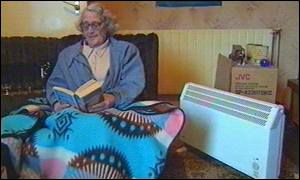 Many elderly people struggle to cope alone It may come as some surprise that free long term care for the elderly heads the list of the public's priorities in the BBC NHS poll. Media and political debate has focused on waiting lists, hospital performance and the state of A&Es. What might explain the result? And what does it tells us about the public's view of health and the significance for Labour policy? Roger Wicks, BBC social affairs analyst, examines the issues. In his first party conference as Prime Minister in 1997, Tony Blair said: "It's pretty simple the type of country I want. It's a country where our children are proud and happy to grow up in� I don't want them brought up in a country where the only way pensioners can get long term care is by selling their home." It is this kind of sentiment which explains the result of the BBC's poll on the NHS. But it will prove awkward for the government. In other areas, like waiting times and the need to improve cancer rates, ministers can point to a commitment to extra spending to come and future targets for improvement. On the issue of long term care however the Department of Health has already crossed the Rubicon. Critical decision A critical decision has been made which is entirely contradicted by the result of the poll. The government decided as part of its NHS Plan in June 2000 that nursing, or medical, care would be made freely available but not 'personal care', such as the washing and feeding of patients with Alzheimer's disease. The distinction led to great criticism from pensioner groups, the Liberal Democrats and Labour backbenchers. Nurses organisations argued that it was not always possible to say whether care could be termed as nursing or personal care. Most embarrassing of all, Labour in Scotland opposed the move. The Scottish Executive is pledged to provide both freely raising the prospect of two different systems either side of the border. The Conservatives and Liberal Democrats argue that Labour has created the mother of all health inequalities. However, what is perhaps more significant is what the poll says about public expectations. Universalism Free care for the elderly is linked to the principle of universalism - the idea that services should be freely available regardless of a person's income. But payments for personal care will be means-tested. The government argue that their policies stop elderly people from having to sell their homes to pay the costs of their care. But they will still have to pay for the cost of personal care, as well as accommodation. Will this protect people from selling their homes or simply delay the event? | | See also:  Top Health stories now:  Links to more Health stories are at the foot of the page. | ||||||||||||||||
|
Links to more Health stories |
 | | ^^ Back to top News Front Page | World | UK | UK Politics | Business | Sci/Tech | Health | Education | Entertainment | Talking Point | In Depth | AudioVideo ---------------------------------------------------------------------------------- To BBC Sport>> | To BBC Weather>> ---------------------------------------------------------------------------------- © MMIII|News Sources|Privacy  |


 E-mail this story to a friend