|
 |
 | | | | | | |||||||||||||||||||||||||||||||||||||||||||||||||||||||||||||||||||||||||||||||||||||||||||||||||||||||||||||||||||||||||||||||||||||||||||||||||||||||||||||||||||||||||||
| | | You are in: Europe | |||||||||||||||||||||||||||||||||||||||||||||||||||||||||||||||||||||||||||||||||||||||||||||||||||||||||||||||||||||||||||||||||||||||||||||||||||||||||||||||||||||||||||||
|
| | Tuesday, 14 January, 2003, 09:03 GMT Czechs look to post-Havel life  Havel leaves his country in Nato and heading for the EU
With Czech President Vaclav Havel about to retire after more than a dozen years in Prague Castle, analysts are predicting a stalemate in the election to choose his successor. The Czech president is elected by parliament, not the people, and with no party commanding a majority in parliament, no candidate clearly leads the pack.
"I think the winner will either be Mr Klaus or Mr Pithart - or nobody," Alexandr Mitrofanov, political correspondent of the Czech daily Pravo, told BBC News Online. Jiri Pehe, a former adviser to President Havel and now head of New York University's Prague programme, is putting his money on the last of those three choices. "I don't think anyone will be elected on Wednesday," he said.
Many analysts expect the country to be without a president for some time after Mr Havel steps down on 3 February. But as the president's position is largely ceremonial, the lack of one would be unlikely to affect the daily business of the government. Whoever is eventually elected, the departure of Mr Havel from the scene will have a major effect on the country, Mr Pehe told BBC News Online. "The country's image will change internationally," he said. "Vaclav Havel has provided a very pretty facade, but this is a post-Communist country with all of its ills," he said. No obvious successor Mr Havel, who became president of Czechoslovakia in 1989 after helping to lead the Velvet Revolution that toppled the country's communist regime, is the last Eastern European dissident still in power.
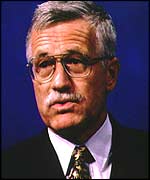
His successor is unlikely to be a comparable figure. Mr Pithart is himself a former dissident and comes closest. But he is a member of the Christian Democrats, one of the smallest parties in parliament. Mr Klaus, a sharp-tongued, free market economist and former prime minister, is a divisive figure revered by many Czechs but reviled by a perhaps equal number. A third candidate, Miroslav Krizenecky, is the nominee of the still untouchable Communist Party.
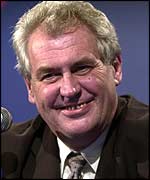
He is not considered a political heavyweight and is seen as having little hope of winning despite being the only candidate to campaign nationwide. He has been hit in the last few weeks by scandals over his claim to have helped a dissident when he was a judge in the communist period and over a fatal car accident. Outsider's hopes Mr Zeman has said he will run in a second round if no-one is elected in the first round. Mr Mitrofanov said that is what Mr Zeman is expecting. "His position will be much stronger then - he will come as a saviour," the Pravo journalist said. He predicted that either Mr Klaus or Mr Zeman would be "much more political" presidents than Mr Havel. "I can hardly imagine Mr Klaus or Mr Zeman sitting at Prague Castle and writing speeches - they are both political animals, literally," he said. Mr Pehe agreed, adding that is why he thinks neither is likely to be elected. "Both Mr Klaus and Mr Zeman are polarising figures. They would be bad for the country. The president has to be an integrating figure," he said. "They will have to come up with some new names," he predicted. Despite the difficulties surrounding the election, neither analyst said Mr Havel's retirement was an insurmountable obstacle. "His deeds for the sake of the Czech Republic were very good, but it makes no sense to complain that he will not be here anymore," Mr Mitrofanov said. "I don't see it as a tragic thing," Mr Pehe said. "The fact that we can do without Mr Havel means that we have become a stable democracy." | | See also:  04 Jun 02 | Europe 12 Feb 01 | Europe 20 Oct 02 | Country profiles 20 Oct 02 | Country profiles 21 Nov 02 | Europe Internet links: The BBC is not responsible for the content of external internet sites Top Europe stories now: Links to more Europe stories are at the foot of the page. | |||||||||||||||||||||||||||||||||||||||||||||||||||||||||||||||||||||||||||||||||||||||||||||||||||||||||||||||||||||||||||||||||||||||||||||||||||||||||||||||||||||||||||
 | |
|  E-mail this story to a friend E-mail this story to a friend |
| |
| Links to more Europe stories |
| | | ||
 | ||||
 | | Back to top
| ||
| ---------------------------------------------------------------------------------- To BBC Sport>> | To BBC Weather>> | To BBC World Service>> ---------------------------------------------------------------------------------- © MMIII | News Sources | Privacy |






 Vaclav Havel has provided a very pretty facade, but this is a post-Communist country with all of its ills