|
 |
 | | | | | | ||||||||||||||||||||||||||||||||||||||||||||||||||||||||||||||||||||||||||||||||||||||||||||||||||||||||||||||||||||||||||||||||||||||||||||||||||||||||||||||||||||||||||||||||||||||||
| | | You are in: Europe | ||||||||||||||||||||||||||||||||||||||||||||||||||||||||||||||||||||||||||||||||||||||||||||||||||||||||||||||||||||||||||||||||||||||||||||||||||||||||||||||||||||||||||||||||||||||||||
|
| | Monday, 2 December, 2002, 12:10 GMT Cyprus ready for Europe  Cyprus is in the Middle East but feels like Europe
So many European tourists come to the Republic of Cyprus each year that it is difficult to believe that it is not already a fully paid up member of the European community. Despite being geographically closer to the Middle East, Greek Cypriots have long considered themselves - culturally at least - to be at the heart of Europe.
Close ties with Greece and with former colonial power Britain combine to give Cyprus a strongly European feel. It is an impression that is brought home to European visitors to the island on arrival - for the last three years or more, they have been able to join an "EU countries" queue at Larnaca airport and enter the country without having their passports stamped. EU burden Life has been subtly changing in other ways too, since legislation introduced to harmonise laws with the rest of the EU began to take effect.
For shopkeepers, the new legislation just means more paperwork. "I think we will have difficult times adjusting with all this unnecessary legislation, bureaucracy which we are not used to," says one. "God help us, because we don't know anything about filling in forms. Cyprus is a leisurely place - people are more relaxed - Europe is a country where you have to run and the rat race." Laissez-faire worries Many Greek Cypriots share this apprehension that their laid-back, laissez-faire approach to life may not be compatible with Brussels-style efficiency and organisation. And despite official enthusiasm about joining the European club, most Greek Cypriots know very little about what it will mean.
There was an outcry on the island recently when the government attempted to enforce EU legislation banning a highly lucrative trade in trapping small birds and selling them to restaurants. More than 8,000 Greek Cypriots returned their voting cards - protesting that their traditional way of life was under threat from faceless European bureaucrats. Solid support But despite this, the majority of Greek Cypriots are solidly behind the island's bid for EU membership. For them any tangible benefits are outstripped by the psychological advantage of feeling that they now have Europe on their side.
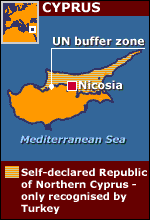
With one-third of the island occupied by Turkish troops since Turkey invaded Cyprus in 1974, Greek Cypriots view membership of Europe as a guarantee of their future security. "The application of Cyprus to join union will act as a catalyst for the re-unification of the island," says Cyprus' chief EU negotiator George Vassilliou. "We were hoping this could happen before accession; it now its seems it may not, although I still believe we may still see a change of Turkish policy towards Cyprus." Forgotten north Brussels has repeatedly said that the Republic of Cyprus - in practice this is the southern, mainly Greek Cypriot half - will still be entitled to join Europe even if no solution is found to the island's 28-year division before 2004.
Their self-declared Turkish Republic of Northern Cyprus, is recognised only by Turkey, and international sanctions mean that Turkish Cypriots cannot trade with any other country. Partly for this reason, GDP in the south of the island is seven times higher than in the north. Exodus Many Turkish Cypriots fear that gap will only increase if the republic joins Europe before re-unification. Tired of economic hardship and international isolation, Turkish Cypriots are packing their bags and leaving Cyprus in record numbers. Many, like Turkish Cypriot journalist Sevgul Uludag, fear for the future of their community if they are excluded from the accession process. "The European Union never really took a real interest in the Turkish Cypriot community," he says. "In 10 years, there will not even be one Turkish Cypriot left on this island. We are as a community becoming extinct." | |
Internet links:  The BBC is not responsible for the content of external internet sites Top Europe stories now: Links to more Europe stories are at the foot of the page. | ||||||||||||||||||||||||||||||||||||||||||||||||||||||||||||||||||||||||||||||||||||||||||||||||||||||||||||||||||||||||||||||||||||||||||||||||||||||||||||||||||||||||||||||||||||||||
| |
|  E-mail this story to a friend E-mail this story to a friend |
| |
| Links to more Europe stories |
| | | ||
 | ||||
 | | Back to top
| ||
| ---------------------------------------------------------------------------------- To BBC Sport>> | To BBC Weather>> | To BBC World Service>> ---------------------------------------------------------------------------------- © MMIII | News Sources | Privacy |