|
 |
 | | | | | | ||||||||||||||||||||||||||||||||||||||||||||||||||||||||||||||||||||||||||||||||||||||||||||||||||||||||||||||||||||||||||||||||||||||||||||||||||||||||||||||||||||||||||||
| | | You are in: Europe | ||||||||||||||||||||||||||||||||||||||||||||||||||||||||||||||||||||||||||||||||||||||||||||||||||||||||||||||||||||||||||||||||||||||||||||||||||||||||||||||||||||||||||||||
|
| | Wednesday, 27 November, 2002, 14:53 GMT Submarine sets off on Prestige mission 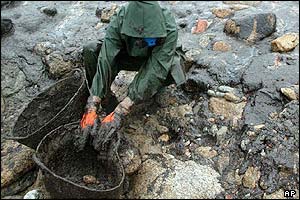 Clean-up operations have been continuing A French submarine has begun its voyage to the site where the Prestige tanker sank in the Atlantic last week, to check whether it is still leaking oil. The three-man Nautili left Nice on Tuesday evening and is heading for the tanker's resting place, where it is expected to arrive on Sunday. The submarine set off as France and Spain agreed to impose inspections of ageing, single-hulled oil tankers sailing through their waters. And on Wednesday, France asked Estonia to inspect an ageing oil tanker due to sail past the French coast, but the request was denied.
"Just a week ago, the Byzantium underwent a full inspection at the port of Rotterdam in the Netherlands," a spokesman for the Estonian ministry of transport and communications, told French news agency AFP. "Under international regulations, to which Estonia is party, there is no need to have additional control now," he said. The French media has described the tanker - reported to be Greek-owned, but Russian-chartered - as a floating dump. Clean-up operations have been continuing off the coast of Galicia amid French fears that an oil slick still at sea could be heading towards France's Atlantic beaches. Dozens of dead birds are still being washed up on Galician beaches. 'Tighter controls' Spain and France have agreed to start inspecting vessels deemed dangerous, and if appropriate, to force them out of the 320-kilometre (200 mile) economic exclusion zone around their coastlines. It means all single-hulled vessels over 15 years old carrying fuel will be subject to exhaustive checks. The two countries have agreed to push ahead with the measures without waiting for the rest of the European Union to endorse the plan. The Prestige shed an estimated 11,000 metric tons of its cargo of around 70,000 tons of fuel oil, polluting miles of the Galician coastline, killing seabirds and halting fishing. The rest of the cargo went down with the ship, where authorities hope it will solidify. | |
See also:  26 Nov 02 | Europe 25 Nov 02 | Europe 23 Nov 02 | Europe 22 Nov 02 | Europe 19 Nov 02 | Science/Nature Internet links: The BBC is not responsible for the content of external internet sites Top Europe stories now: Links to more Europe stories are at the foot of the page. | ||||||||||||||||||||||||||||||||||||||||||||||||||||||||||||||||||||||||||||||||||||||||||||||||||||||||||||||||||||||||||||||||||||||||||||||||||||||||||||||||||||||||||||
| |
|  E-mail this story to a friend E-mail this story to a friend |
| |
| Links to more Europe stories |
| | | ||
 | ||||
 | | Back to top
| ||
| ---------------------------------------------------------------------------------- To BBC Sport>> | To BBC Weather>> | To BBC World Service>> ---------------------------------------------------------------------------------- © MMIII | News Sources | Privacy |