|
 |
 | | | | | | ||||||||||||||||||||||||||||||||||||||||||||||||||||||||||||||||||||||||||||||||||||||||||||||||||||||||||||||||||||||||||||||||||||||||||||||||||||||||||||||||||||||||||||||||||||||||||||||||||||||||||||||||||||||||||||||||||||||||||||||||||||
| | | You are in: Europe | ||||||||||||||||||||||||||||||||||||||||||||||||||||||||||||||||||||||||||||||||||||||||||||||||||||||||||||||||||||||||||||||||||||||||||||||||||||||||||||||||||||||||||||||||||||||||||||||||||||||||||||||||||||||||||||||||||||||||||||||||||||||
|
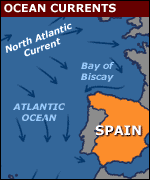
| | Friday, 22 November, 2002, 03:41 GMT Storms threaten Spanish oil salvage 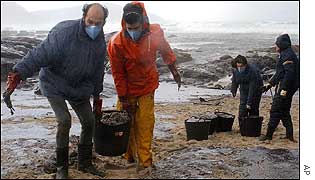 Several thousand tonnes have already come ashore Fierce storms are brewing around the coast of north-western Spain, threatening to push more slicks from the sunken Prestige oil tanker towards the shore. Weather conditions are keeping salvage vessels in harbour, and making it difficult to see how much oil is moving and when it may reach land.
Meanwhile, a no-fishing zone around the coast has been extended to cover a much wider area. The BBC's Claire Marshall says that the ban will only increase the misery being suffered by fishing communities of the Galician region. Earlier, European Union Transport Commissioner Loyola de Palacio called on EU member states to take urgent steps to ban the use of single-hulled tankers in European waters. Though most of the oil appears to be still trapped in the ship, at least 80 kilometres (50 miles) of the Spanish coastline have already been blackened by oil since the Prestige ran into trouble during a storm last week. The Spanish authorities are erecting more floating booms around the areas which they fear could be worst hit. 'Old and out of date' Ms de Palacio was speaking in a debate in the European Parliament, prompted by the sinking of the Prestige, which had 77,000 metric tons of oil on board.
She called for a decision to be taken outlawing single-hulled tankers at a forthcoming meeting of EU transport ministers in Brussels. Spanish Prime Minister Jose Maria Aznar also called for measures to improve safety and a European compensation fund for similar disasters. Fishing woes The EU agreed in 2000 to ban single-hulled tankers by 2015, and to set age limits for tankers using the territorial waters of EU states.
On Thursday the Danish Government, which currently holds the EU's rotating presidency, backed an earlier call by Ms de Palacio for these measures to be implemented ahead of schedule.
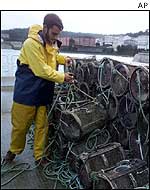
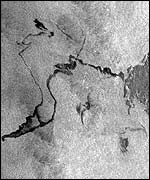
People are now unable to fish along more than 300 km of coastline, and the sale of shellfish has been banned in many areas. Spanish officials say at least 40 beaches have so far been affected. Up to seven more oil slicks are said to be out at sea, one of them eight kilometres (5 miles) long. The Prestige finally sank after breaking in two on Tuesday. Salvage workers believe it is the tanker's own fuel that has leaked into the ocean, rather than its cargo. Environmentalists warn that if the entire cargo spills, the resulting damage could be double that caused by the Exxon Valdez in Alaska in 1989 - one of the worst ever. | |
See also:  20 Nov 02 | Media reports 21 Nov 02 | Europe Internet links: The BBC is not responsible for the content of external internet sites Top Europe stories now: Links to more Europe stories are at the foot of the page. | ||||||||||||||||||||||||||||||||||||||||||||||||||||||||||||||||||||||||||||||||||||||||||||||||||||||||||||||||||||||||||||||||||||||||||||||||||||||||||||||||||||||||||||||||||||||||||||||||||||||||||||||||||||||||||||||||||||||||||||||||||||
| |
|  E-mail this story to a friend E-mail this story to a friend |
| |
| Links to more Europe stories |
| | | ||
 | ||||
 | | Back to top
| ||
| ---------------------------------------------------------------------------------- To BBC Sport>> | To BBC Weather>> | To BBC World Service>> ---------------------------------------------------------------------------------- © MMIII | News Sources | Privacy |