|
 |
 | | | | | | |||||||||||||||||||||||||||||||||||||||||||||||||||||||||||||||||||||||||||||||||||||||||||||||||||||||||||||||||||||||||||||||||||||||||||||||||||||||||||||||||||||||||||||||||||||||||||||||||||||||||||||||||||||||||||||||||||||||||||||||||||||||||||||||||
| | | You are in: Europe | |||||||||||||||||||||||||||||||||||||||||||||||||||||||||||||||||||||||||||||||||||||||||||||||||||||||||||||||||||||||||||||||||||||||||||||||||||||||||||||||||||||||||||||||||||||||||||||||||||||||||||||||||||||||||||||||||||||||||||||||||||||||||||||||||||
|
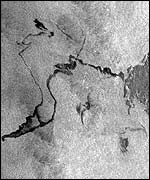
| | Wednesday, 20 November, 2002, 16:01 GMT Second slick threatens coastline 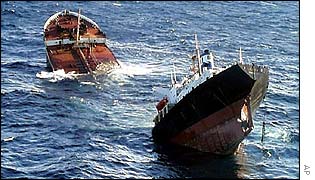 It is hoped the thick fuel oil will solidify on the bottom Strong winds are threatening to push a second oil slick which has formed around the wreck of the sunken Prestige tanker towards the Spanish and Portuguese coasts.
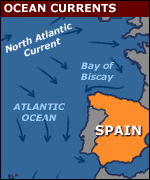
More than 80 kilometres (50 miles) of Galicia's coastline in Spain have already been blackened by oil since the Prestige was damaged and began losing its cargo during a storm last Wednesday. The second slick formed on Tuesday, after the tanker split in two and began to sink about 210km off the Spanish coast - experts fear it could hit land within two days. The UK Meteorological Office said that with wind and current direction forecast to continue westerly or north-westerly in the next three or four days, the Portuguese coast would be the most vulnerable.
More than 1,000 Spanish fishermen are using their own boats further south to keep the sludge out of an estuary. Fishing has been banned for at least one month along the 100km stretch of coastline from Roncudo to Cape Tourinan.
Ecologists, soldiers and volunteers are working to rescue tar-coated sea birds and clear the sticky sludge which is blackening the coastline. The accident has prompted urgent international calls for tighter controls on the movement of single-hulled oil tankers like the Prestige in coastal waters. Winds forecast Reconnaissance planes are flying over the area where the tanker sunk - which is 3.5km deep - to monitor the second slick. They are expected to determine the size of the spill which emerged on Tuesday.
Salvage workers believe it is the Prestige's own fuel that has leaked into the Atlantic Ocean, rather than its cargo. It is feared that heavy winds forecast for the next few days - which reach up to 100 km/h in the area - will blow the slick towards the coast. The UK Met Office, which has been issuing bulletins to shipping in the area, said Portugal was likely to take the brunt of the pollution. "The Portuguese and north-west Spanish coast are at risk I would have thought - but primarily the Portuguese coast," said the Met's Martin Rowley. Finger of blame It remains unclear if the oil inside the Prestige will disperse if the ship breaks up further. So far, Spanish officials say, there have been no new leaks.
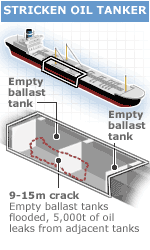
Environmentalists warn that if the entire cargo of some 77,000 metric tons spills, the resulting damage could be double that caused in the Exxon Valdez disaster off the coast of Alaska in 1989 - one of the worst ever. Experts say the low sea temperature may delay the seepage of oil from the compartments that split and might even solidify the cargo. The Spanish Prime Minister, Jose Maria Aznar, has vowed to make whoever is responsible pay for Spain's worst shipping disaster in 10 years. But the Chief Executive of Smit Salvage, the Dutch company which tried to save the ship, has criticised the Spanish Government for its decision to move the ship away from the Spanish coast.
However, he said that the decision rested with politicians rather than scientists. Single-hulled tankers are not due to be outlawed in Europe for another 13 years, but Spain has said it will push for the proposed European Union ban to be brought forward. | |
See also:  20 Nov 02 | Media reports Internet links: The BBC is not responsible for the content of external internet sites Top Europe stories now: Links to more Europe stories are at the foot of the page. | |||||||||||||||||||||||||||||||||||||||||||||||||||||||||||||||||||||||||||||||||||||||||||||||||||||||||||||||||||||||||||||||||||||||||||||||||||||||||||||||||||||||||||||||||||||||||||||||||||||||||||||||||||||||||||||||||||||||||||||||||||||||||||||||||
| |
|  E-mail this story to a friend E-mail this story to a friend |
| |
| Links to more Europe stories |
| | | ||
 | ||||
 | | Back to top
| ||
| ---------------------------------------------------------------------------------- To BBC Sport>> | To BBC Weather>> | To BBC World Service>> ---------------------------------------------------------------------------------- © MMIII | News Sources | Privacy |