|
 |
 | | | | | | |||||||||||||||||||||||||||||||||||||||||||||||||||||||||||||||||||||||||||||||||||||||||||||||||||||||||||||||||||||||||||||||||||||||||||||||||||||||||||||||||||||||||||||||||||||
| | | You are in: Europe | |||||||||||||||||||||||||||||||||||||||||||||||||||||||||||||||||||||||||||||||||||||||||||||||||||||||||||||||||||||||||||||||||||||||||||||||||||||||||||||||||||||||||||||||||||||||
|
| | Wednesday, 20 November, 2002, 11:56 GMT Ex-Iraq army chief faces Danish court 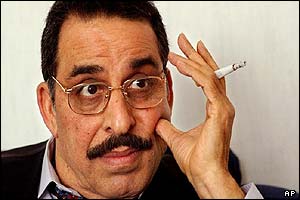 Khazraji is under house arrest The former head of Iraq's army has been placed under house arrest in Denmark on charges of using chemical weapons against Kurds. Nizar al-Khazraji, who now lives in Denmark after fleeing Iraq, was detained after a Kurdish refugee apparently recognised him in the street and informed police. After a five-hour court hearing late on Tuesday, a magistrate in the town of Soroe, outside Copenhagen, rejected prosecution requests for him to be detained in custody. Mr Khazraji, who has been named as a possible successor to Saddam Hussein, is accused over Operation Anfal, a military clampdown on Kurdish areas in the late 1980s.
The worst single incident was a chemical weapon air attack on the Kurdish town of Halabjah in 1988. An estimated 5,000 people died. The former general, who was head of the armed forces when Iraq invaded Kuwait in 1990, was placed under house arrest by the court, and must report regularly to police. There were "justifiable suspicions" that Mr Khazraji was implicated in Iraqi war crimes, the magistrate said. Prosecutor Brigitte Vestberg said Mr Khazraji was suspected of crimes against humanity and violation of the Geneva convention on protection of civilians during war. "He allegedly offered command of an army division to the officer who led the so-called Operation Anfal against Kurds in northern Iraq in the late 1980s, during which thousands of people died," she said in a statement. Counter-claims Mr Khazraji has said he will appeal against the decision to place him under house arrest. Mr Khazraji says Iraqi secret police have made the claims to stop him from being able to leave Denmark to organise an Iraqi dissident movement.
The chemical attacks against the Kurds caused international outrage, and continue to be cited as evidence that Iraq is willing and able to use chemical warfare. One report says Mr Khazraji may be accused of ordering the use of chemical weapons during the Iraq-Iran war. Mr Khazraji, 64, who lives in Soroe, applied for political asylum in Denmark, but his request was rejected. However, the authorities granted him leave to remain in the country, on the grounds that he could face execution in Iraq. He originally fled to Jordan in 1995. The former general is believed to be the highest-ranking officer to have defected from Saddam Hussein's regime. A lawyer acting for Mr Khazraji, Anders Josefson, said the former general was "surprised" by the move. The move against Mr Khazraji appears to have been triggered by an application to travel to Saudi Arabia. Mr Khazraji had recently asked for permission to go there, and the Saudi authorities had agreed to receive him, local news agency Ritzau reports. But the Danish authorities, who had been investigating the former general for some months, feared that he might leave the country and fail to return. Iraqi coup Media reports have suggested that Mr Khazraji is seen as a possible Saddam Hussein successor by Washington, although his name is not currently thought to be among the most favoured "candidates". He has previously told the BBC that he would be willing to lead a military coup against Saddam Hussein, but ruled out a post-conflict political role for himself. He ran the Iraqi army from 1987 until he was fired by Saddam Hussein in 1990. Some reports say he retains a considerable following within the Iraqi army. His arrest comes three weeks after the Danish authorities detained a key rebel Chechen leader, Ahmed Zakayev, who is accused by Russia of involvement in terrorist acts. Russia wants Mr Zakayev extradited, but Denmark has so far said Moscow has provided insufficient evidence against him. | |
See also:  17 Mar 02 | Middle East 28 Sep 02 | Media reports 23 Sep 02 | Middle East 21 Nov 00 | Europe 31 Oct 02 | Europe Top Europe stories now: Links to more Europe stories are at the foot of the page. | |||||||||||||||||||||||||||||||||||||||||||||||||||||||||||||||||||||||||||||||||||||||||||||||||||||||||||||||||||||||||||||||||||||||||||||||||||||||||||||||||||||||||||||||||||||
| |
|  E-mail this story to a friend E-mail this story to a friend |
| |
| Links to more Europe stories |
| | | ||
 | ||||
 | | Back to top
| ||
| ---------------------------------------------------------------------------------- To BBC Sport>> | To BBC Weather>> | To BBC World Service>> ---------------------------------------------------------------------------------- © MMIII | News Sources | Privacy |