|
 |
 | | | | | | ||||||||||||||||||||||||||||||||||||||||||||||||||||||||||||||||||||||||||||||||||||||||||||||||||||||||||||||||||||||||||||||||||||||||||||||||||||||||||||||
| | | You are in: Europe | ||||||||||||||||||||||||||||||||||||||||||||||||||||||||||||||||||||||||||||||||||||||||||||||||||||||||||||||||||||||||||||||||||||||||||||||||||||||||||||||||
|
| | Friday, 15 November, 2002, 01:21 GMT Germ warfare talks end in Geneva 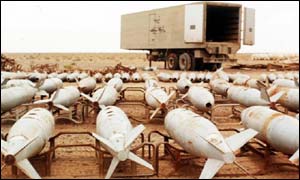 Biological weapons are banned under the 1972 treaty Countries taking part in a conference on protecting the world against germ warfare have agreed to continue efforts strengthen a 30-year-old ban on biological weapons.
Conference chairman Tibor Toth said that the plan was the only way to keep the United States involved in discussions after they walked out of talks last year over plans to introduce spot checks and on-site weapons inspections. This is the new beginning," he told Reuters news agency. "What we have delivered today is a common action programme." Watered down? Member states are trying to agree on methods to strengthen the effectiveness of the 1972 treaty - which bans all biological weapons. The new plan covers issues such as adopting a code of conduct for scientists and improving national control of toxins, however there is no longer any mention of anything concrete such as on-site inspectors. And BBC correspondents say that some delegates believe the plan has been watered down and that more concerted action is needed. Washington had been reluctant to continue the debate and had said it would rather see the talks postponed. But now it says it is "pleased" with the outcome of the talks. "We believe the work programme represents a realistic and constructive approach," US Assistant Secretary of State for Arms Control Stephen Rademaker said. Accusations BBC correspondents say the US has warned that, despite lending its support to discussions, it feels the threat of possible terrorist strikes using biological agents means the germ warfare treaty is not sufficient to tackle the problem alone. Last December, after several years of discussing ways of enforcing the germ warfare treaty, the US shocked other member countries by suddenly walking out of the debate. It had claimed the proposed system of inspections would be ineffective in detecting violations, and could compromise US national security. Last year the US publicly accused Iraq, Iran, North Korea and Libya of developing germ weapons. | | See also:  29 Oct 02 | Americas 25 Jul 01 | Americas 25 Jul 01 | Americas 25 Jul 01 | Americas Internet links: The BBC is not responsible for the content of external internet sites Top Europe stories now: Links to more Europe stories are at the foot of the page. | ||||||||||||||||||||||||||||||||||||||||||||||||||||||||||||||||||||||||||||||||||||||||||||||||||||||||||||||||||||||||||||||||||||||||||||||||||||||||||||||
| |
|  E-mail this story to a friend E-mail this story to a friend |
| |
| Links to more Europe stories |
| | | ||
 | ||||
 | | Back to top
| ||
| ---------------------------------------------------------------------------------- To BBC Sport>> | To BBC Weather>> | To BBC World Service>> ---------------------------------------------------------------------------------- © MMIII | News Sources | Privacy |