|
 |
 | | | | | | ||||||||||||||||||||||||||||||||||||||||||||||||||||||||||||||||||||||||||||||||||||||||||||||||||||||||||||||||||||||||||||||||||||||||||||||||||||||||||||||||||||||||||||||||||||||||||||||
| | | You are in: Europe | ||||||||||||||||||||||||||||||||||||||||||||||||||||||||||||||||||||||||||||||||||||||||||||||||||||||||||||||||||||||||||||||||||||||||||||||||||||||||||||||||||||||||||||||||||||||||||||||||
|
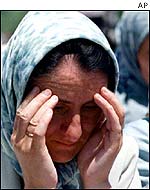
| | Monday, 11 November, 2002, 11:39 GMT Dutch open Srebrenica inquiry 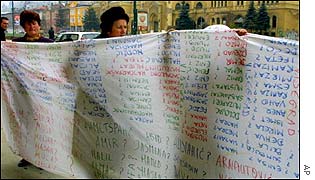 Relatives insist the Dutch remember those who died The Dutch parliament has begun a public inquiry into the deaths of more than 7,000 Muslims in the Srebrenica massacre in Bosnia. The inquiry will try to get to the bottom of suggestions of an army cover up to protect those responsible. The murders in 1995 took place even though Srebrenica had been designated a UN safe area.
An official report published in April sparked the resignation of the cabinet and an army general. The report said political and military leaders had sent the peacekeepers on an impossible mission. The inquiry will focus on the responsibility of politicians, government officials and soldiers. More than 30 witnesses will be questioned, possibly including a number of senior foreign UN representatives. The first witness was company commander Captain Jelte Groen, of the peacekeeping battalion Dutchbat, which was on the ground in Srebrenica. Long wait The hearings are being broadcast on national television. Relatives of the Srebrenica victims have waited seven years for the inquiry, and the outcome could lead to damages claims against the Dutch state. The April report blamed the Dutch Government and the UN for the tragedy. But critics claim that the Netherlands needs to establish individual rather than collective responsibility - one of the committee's key areas of inquiry. The committee's final report will be presented next January. The BBC's Geraldine Coughlan in The Hague says the political fall-out from this public inquiry will not be devastating. But it may establish grounds for legal claims by Srebrenica survivors against the Dutch state, if individuals were found to have failed to prevent the massacre. | |
See also:  16 Apr 02 | Europe 10 Apr 02 | Europe 10 Apr 02 | Europe 16 Apr 02 | Europe 10 Apr 02 | Europe 02 Aug 01 | Europe 17 May 02 | Europe Internet links: The BBC is not responsible for the content of external internet sites Top Europe stories now: Links to more Europe stories are at the foot of the page. | ||||||||||||||||||||||||||||||||||||||||||||||||||||||||||||||||||||||||||||||||||||||||||||||||||||||||||||||||||||||||||||||||||||||||||||||||||||||||||||||||||||||||||||||||||||||||||||||
| |
|  E-mail this story to a friend E-mail this story to a friend |
| |
| Links to more Europe stories |
| | | ||
 | ||||
 | | Back to top
| ||
| ---------------------------------------------------------------------------------- To BBC Sport>> | To BBC Weather>> | To BBC World Service>> ---------------------------------------------------------------------------------- © MMIII | News Sources | Privacy |