|
 |
 | | | | | | ||||||||||||||||||||||||||||||||||||||||||||||||||||||||||||||||||||||||||||||||||||||||||||||||||||||||||||||||||||||||||||||||||||||||||||||||||||||||||||||||||||||||||||||
| | | You are in: Europe | ||||||||||||||||||||||||||||||||||||||||||||||||||||||||||||||||||||||||||||||||||||||||||||||||||||||||||||||||||||||||||||||||||||||||||||||||||||||||||||||||||||||||||||||||
|
| | Thursday, 7 November, 2002, 20:01 GMT Greek police accused of abuses 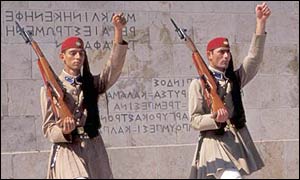 All eyes will be on Greece when it hosts the Olympics
But in fact it is the kind of treatment the Greek police are accused of using, especially when dealing with minorities and immigrants. Amnesty International and the International Helsinki Federation are so concerned about the number of alleged cases that they have issued a joint report on the subject. They say tactics frequently used by the Greek police as well as other European police forces like Spain violate the European convention on human rights.
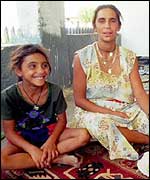
Police brutality is a subject which barely registers as an issue on the Greek political spectrum, but as Greece rolls up its sleeves to take over the EU presidency this December, will questions be asked? The suburb of Zephyri is only a 30-minute drive from Athens, but it feels like another country. Children run barefoot by the roadside, and the houses are a jumble of corrugated iron and unfinished plaster. The people who live here are Roma - Greece's largest and best-integrated minority. Although they are Greek citizens, most are poor and uneducated - there is 90% illiteracy. Many Roma make a living on the black market, which means they have frequent run-ins with the police.
Graffiti on the walls alongside the main street reads "Police are murderers" and "Police Kill". There is also a makeshift shrine with flowers and candles in memory of Marinos Christopolou. He was shot last year by a police officer at this spot on his way home from buying nappies at a local store. His crime was not stopping in time at a routine police roadblock. His sister Charoula is leading a high-profile media campaign to try to indict the police officer who killed her brother. "Marinos couldn't pull over in time at the road block. The police officer shot twice - he missed the first time and hit him the second time in the back of the head, killing him instantly. No one from the police came to offer their condolences," she said. Beating Charoula's neighbour Theodoros Stephanou looks bewildered as he recounts his recent encounter with the police, when he voluntarily turned himself in for questioning about a suspected theft. "The police commander and his officers took me into a little room. Then one officer started to beat me as the commander asked me where the money was."
Even though he had to be treated in hospital for his injuries, Theodoros is unlikely to get very far with a complaint against the police. Experiences like his are relatively common especially amongst minorities. Panayote Dimitras has compiled information on thousands of cases for the report by Amnesty International and the International Helsinki Federation. He believes some methods used by the police when dealing with detainees in custody or immigrants facing deportation constitute torture and breach the European Convention on Human Rights which Greece has signed. "We have seen very recently very alarming treatments. One is electric shocks ... this treatment has not been heard of in Greece for 10 years and then we had two cases this summer," Mr Dimitras said. "In other cases of wanting to get detainees to confess information in custody we have cases of Roma beaten with clubs and attempted rape with police truncheons." Acting with impunity But Mr Dimitras thinks the police in Greece are probably no worse than their counterparts elsewhere in Europe: "There are bad cops everywhere but Greece is the worst culprit." In Greece, problems of violence and torture are much more frequent because there is a culture of impunity - it is difficult to bring police officers to book. It is only when the victim is of ethnic Greek background that success in the courts is more likely.
In a comfortable office in uptown Athens, Yannis Katsiotis says he knows all too well about police impunity. He launched his own investigation after an off-duty drunk police officer shot and paralysed his teenage son as he parked outside a friend's party. Through his own research, Mr Katsiotis discovered that the police officer had a previous track record of drink driving and firearms offences which was covered up by fellow officers and ignored by the district attorney. This officer has now been dismissed but is free pending appeal. "This man ... with this character after so many years is now out of the police. Why does it happen now after my son's injury and not before? For this reason the police are responsible," Mr Katsiotis said. Need for reform Throughout history, the Greek state has used the police as a tool to control the population. Even though the last dictatorship ended in 1974, the concept that the police and judiciary are above responsibility still exists.
The Minister of Public Order, Michalis Chrysochoidis, admits there is a problem. "I have created a task force which studies now all these issues for violence. I believe the Greek police will not use these practices in the future. We will fight them because we don't want this in a democracy." The Olympic souvenir shops on every street corner of Athens are a constant reminder that Greece cannot afford not to reform the police force by the 2004 Olympics, when it will be the focus of international attention. But why isn't the European Union exerting more pressure for change? Greece is about to take over the EU presidency in December at a time when the EU is scrutinising and criticising the human-rights records of applicant countries. Bob Van Den Bos, a Dutch member of the European Parliament, thinks this is a case of double standards. "If Turkey or Romania displayed human rights violations like in Greece, then criticism from the EU member states would be very severe," he said. Unless Greece can improve the record of its own police force, then the European rule book on human rights is likely to suffer a credibility problem. Tamsin Smith filed this report for BBC Radio 4's The World Tonight. | | See also:  10 Oct 02 | Europe 12 Sep 02 | Europe 05 Sep 02 | Europe 17 Aug 02 | Country profiles Internet links: The BBC is not responsible for the content of external internet sites Top Europe stories now: Links to more Europe stories are at the foot of the page. | ||||||||||||||||||||||||||||||||||||||||||||||||||||||||||||||||||||||||||||||||||||||||||||||||||||||||||||||||||||||||||||||||||||||||||||||||||||||||||||||||||||||||||||||
| |
|  E-mail this story to a friend E-mail this story to a friend |
| |
| Links to more Europe stories |
| | | ||
 | ||||
 | | Back to top
| ||
| ---------------------------------------------------------------------------------- To BBC Sport>> | To BBC Weather>> | To BBC World Service>> ---------------------------------------------------------------------------------- © MMIII | News Sources | Privacy |