|
 |
 | | | | | | ||||||||||||||||||||||||||||||||||||||||||||||||||||||||||||||||||||||||||||||||||||||||||||||||||||||||||||||||||||||||||||||||||||||||||||||||||||||||||||||
| | | You are in: Europe | ||||||||||||||||||||||||||||||||||||||||||||||||||||||||||||||||||||||||||||||||||||||||||||||||||||||||||||||||||||||||||||||||||||||||||||||||||||||||||||||||
|
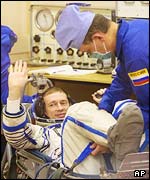
| | Wednesday, 30 October, 2002, 08:13 GMT Team blasts off to space station 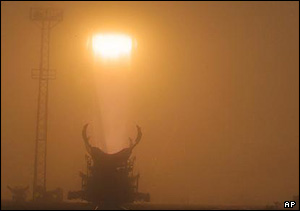 The three-man team lift clear of the Baikonur spaceport The latest Russian mission to the International Space Station (ISS) has blasted off from Kazakhstan. The three-man crew - two Russians and the second Belgian to go into orbit - are on a brief "taxi" visit to fit a new rescue capsule to the platform. The launch had been delayed, after two weeks ago a similar Soyuz rocket blew up at the Plesetsk cosmodrome in Russia within seconds of lift-off. One person on the ground died and several others were injured. Chocolates into space Flight engineer Frank de Winne is proud to be Belgium's second astronaut.
The rocket is to dock at the ISS, which is currently operated by two Russians and an American. Pop star Lance Bass of 'N Sync had hoped to be on the flight and trained at Russia's cosmonaut centre this year, but failed to come up with a reported $20m fee to get his "ticket" into space. Burning debris Space officials said this week that a foreign object was found in the fuel line of the rocket which blew up at the Plesetsk cosmodrome, and the investigation was continuing. The Soyuz-U rocket blew up 29 seconds after take-off, sending burning debris from the rocket on to the launch pad and surrounding forest. The rocket was carrying a Photon-M satellite, which had been due to make a 15-day voyage around the Earth carrying out scientific experiments for European Space Agency member states and other countries. Satellite launches are an important source of revenue for Russia, but there have been failures. Russia lost six communications satellites in December 2000 when a booster rocket carrying them to space from Plesetsk failed shortly after launch. Safety measure The European Space Agency astronaut Frank De Winne is flying with Mission Commander Sergei Zaletin and Soyuz Flight Engineer Yuri Lonchakov. They will dock with the ISS on Friday. The team will leave its Soyuz TMA-1 spacecraft at the platform, returning in an older model already attached to the orbiting outpost. The remaining craft will act as a "lifeboat" should a catastrophic failure on the ISS ever force its resident crew to abandon ship. During his eight-day stay in space, De Winne will carry out a programme of 23 experiments, including biomedical and weightlessness studies. He is using the Microgravity Science Glovebox (MSG) - an important research facility designed and developed in Europe. The first Belgian in space was Dirk Frimout, who flew as payload specialist on a US space shuttle mission, STS-45, in March-April 1992. | | See also:  19 Oct 02 | Science/Nature 16 Oct 02 | Europe 16 Oct 02 | Europe 12 Oct 02 | Science/Nature Internet links: The BBC is not responsible for the content of external internet sites Top Europe stories now: Links to more Europe stories are at the foot of the page. | ||||||||||||||||||||||||||||||||||||||||||||||||||||||||||||||||||||||||||||||||||||||||||||||||||||||||||||||||||||||||||||||||||||||||||||||||||||||||||||||
| |
|  E-mail this story to a friend E-mail this story to a friend |
| |
| Links to more Europe stories |
| | | ||
 | ||||
 | | Back to top
| ||
| ---------------------------------------------------------------------------------- To BBC Sport>> | To BBC Weather>> | To BBC World Service>> ---------------------------------------------------------------------------------- © MMIII | News Sources | Privacy |