|
 |
 | | | | | | |||||||||||||||||||||||||||||||||||||||||||||||||||||||||||||||||||||||||||||||||||||||||||||||||||||||||||||||||||||||||||||||||||||||||||||||||||||||||||||||||||||||||||||||||||||||||||||||||||||||||||||||||||||||||||||||||||||
| | | You are in: Europe | |||||||||||||||||||||||||||||||||||||||||||||||||||||||||||||||||||||||||||||||||||||||||||||||||||||||||||||||||||||||||||||||||||||||||||||||||||||||||||||||||||||||||||||||||||||||||||||||||||||||||||||||||||||||||||||||||||||||
|
| | Monday, 28 October, 2002, 18:31 GMT Putin vows to crush rebels 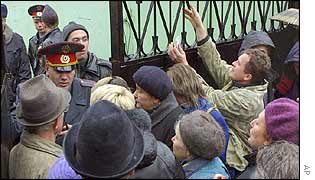 Relatives are being barred from seeing ill hostages Russian President Vladimir Putin says he is giving the military new powers to fight terrorism, two days after special forces ended the Moscow theatre siege with heavy loss of life.
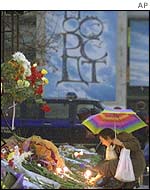
But Russian security forces have denied they acted recklessly, arguing they had to avert a much bigger tragedy and blaming emergency services for not helping the victims quickly enough. About 118 hostages are now known to have died - all but one from gas poisoning. Doctors are warning the death toll could rise further, with hundreds more still in hospital and some critically ill. A national day of mourning has been held and thousands of people have laid flowers at the theatre. In Chechnya itself, the Russian military has launched a crackdown, with reports of 30 fighters killed east of Grozny.Security measures have also been stepped up across Russia, and an accomplice to the hostage-takers is reported to have been discovered in the Moscow police force. The newspaper Izvestiya quoted a security official as saying that the accomplice was arrested after being found to be passing information to the leader of the hostage-takers, Movsar Barayev, by mobile phone. Mystery gas Mr Putin and his officials say the use of the gas was necessary to prevent more deaths in the theatre where the rebels were armed with guns and explosives.
Doctors and some foreign governments whose citizens were in the theatre have criticised Russian authorities for not revealing the make-up of the gas. The head of Russia's Union for Chemical Safety, Lev Fyodorov, told the BBC he thought the gas was a non-lethal chemical weapon developed during the Cold War. Mr Fyodorov said the gas was used to temporarily neutralise enemy troops but its effects were supposed to be reversible. There have been allegations that medical workers on the scene were not given adequate means to save the lives of hostages. One rescuer told the daily Nezavisimaya Gazeta that there was a shortage of stretchers and other equipment and said there had been no pre-arranged plan to deal with casualties. Even a vice-mayor of the city who visited the scene had to be treated for gas poisoning. Army orders On Monday, Mr Putin told cabinet officials he was ordering the Russian general staff to change its guidelines on the use of military forces to deal with what he said was the growing threat of international terrorists using methods "comparable to weapons of mass destruction".
He gave no details. "Russia will not... give in to any blackmail," the Interfax news agency quoted Mr Putin as saying. An international meeting on Chechnya - including Chechen exiles - has opened in Copenhagen despite fierce Russian criticism of the Danish Government. Moscow threatened to boycott a summit with the European Union next month, prompting the Danish EU presidency to change its venue from Copenhagen to Brussels. Later, Danish Prime Minister Anders Fogh Rasmussen said Russia had agreed to the change. Meanwhile the elected Chechen President, Aslan Maskhadov, renewed an offer to hold talks with Moscow, but that is not expected to be accepted. He told AFP that further attacks were inevitable without a peaceful settlement. The BBC's Jonathan Charles, in Moscow, says there are expectations that the military campaign in Chechnya will be intensified amid a widespread desire for some kind of revenge. Critically ill More than 200 people were released from hospital on Monday, but 405 former hostages - including nine children - continue to be treated for the effects of the gas, with 45 of them in a critical condition.
Up to 50 Chechen rebels were also killed during the attack, but it remains unclear how many of them died from poisoning and how many were shot dead. Officials - who want to screen every person in the hospital to make sure no hostage-takers are posing as victims - are still banning visitors from seeing their relatives. Correspondents say that is adding to the confusion and anger at the tactics used by the special forces. 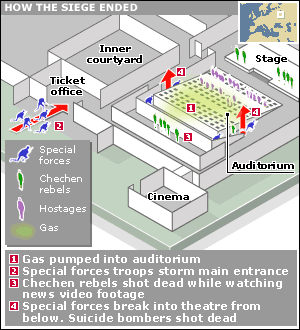 | |
See also:  28 Oct 02 | Europe 27 Oct 02 | Europe 28 Oct 02 | Europe 26 Oct 02 | Europe 28 Oct 02 | Politics 27 Oct 02 | UK Internet links: The BBC is not responsible for the content of external internet sites Top Europe stories now: Links to more Europe stories are at the foot of the page. | |||||||||||||||||||||||||||||||||||||||||||||||||||||||||||||||||||||||||||||||||||||||||||||||||||||||||||||||||||||||||||||||||||||||||||||||||||||||||||||||||||||||||||||||||||||||||||||||||||||||||||||||||||||||||||||||||||||
| |
|  E-mail this story to a friend E-mail this story to a friend |
| |
| Links to more Europe stories |
| | | ||
 | ||||
 | | Back to top
| ||
| ---------------------------------------------------------------------------------- To BBC Sport>> | To BBC Weather>> | To BBC World Service>> ---------------------------------------------------------------------------------- © MMIII | News Sources | Privacy |