|
 |
 | | | | | | ||||||||||||||||||||||||||||||||||||||||||||||||||||||||||||||||||||||||||||||||||||||||||||||||||||||||||||||||||||||||||||||||||||||||||||||||||||||||||||||||||||||||||||||||||||||||||||||||||||||||||||||||
| | | You are in: Europe | ||||||||||||||||||||||||||||||||||||||||||||||||||||||||||||||||||||||||||||||||||||||||||||||||||||||||||||||||||||||||||||||||||||||||||||||||||||||||||||||||||||||||||||||||||||||||||||||||||||||||||||||||||
|
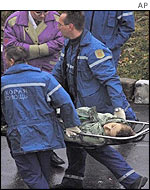
| | Sunday, 27 October, 2002, 19:18 GMT Rights group demands siege gas inquiry 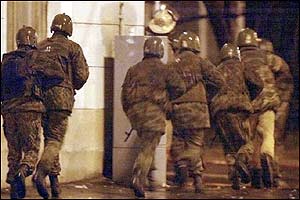 Russia said its troops used a "special substance" Human rights group Amnesty International is pressing for an independent inquiry to reveal details of the gas used during the Russian military operation to end the Moscow theatre siege. The chief doctor in Moscow has said that almost all of the more than 100 hostages who died were killed because of the gas employed by the security forces to overcome the Chechen rebels.
Almost 200 former hostages are seriously ill, with 45 of them described as "critically ill" in intensive care. Judith Arena, Amnesty International spokeswoman, told the BBC that the group wanted to determine whether the use of gas "was the proportionate response and within the law" to end the hostage crisis. Moscow's chief doctor, Andrei Seltsovsky, revealed that only one of the dead hostages died from a bullet wound during the operation to liberate the besieged theatre. Speaking at a press conference, Dr Seltsovsky confirmed what many people here and abroad suspected. With attention focused on the gas, another senior doctor described it as a general anaesthetic. Uncomfortable questions He did not give a name, referring merely to "the substance". Adding that it could have a lethal effect on people who were already ill, he said that it would also harm those in a state of physical exhaustion, such as the hostages. What initially looked like a blisteringly successful operation to liberate the hostages is now giving rise to some uncomfortable questions. Some of the former hostages are now beginning to leave hospital. Nerve agent Most of them say they remember nothing except losing consciousness when the gas came, and then waking up later in hospital. And a leading Russian chemical expert has said he believes the special forces used a nerve agent dating from the Cold War. It would almost certainly not have been devised for use in situations like the one seen in Moscow. The Russian authorities still insist their actions saved the lives of more than 750 people. | |
See also:  27 Oct 02 | Europe 27 Oct 02 | Europe 27 Oct 02 | UK 26 Oct 02 | Europe 25 Oct 02 | Europe 26 Oct 02 | Europe Internet links: The BBC is not responsible for the content of external internet sites Top Europe stories now: Links to more Europe stories are at the foot of the page. | ||||||||||||||||||||||||||||||||||||||||||||||||||||||||||||||||||||||||||||||||||||||||||||||||||||||||||||||||||||||||||||||||||||||||||||||||||||||||||||||||||||||||||||||||||||||||||||||||||||||||||||||||
| |
|  E-mail this story to a friend E-mail this story to a friend |
| |
| Links to more Europe stories |
| | | ||
 | ||||
 | | Back to top
| ||
| ---------------------------------------------------------------------------------- To BBC Sport>> | To BBC Weather>> | To BBC World Service>> ---------------------------------------------------------------------------------- © MMIII | News Sources | Privacy |