|
 |
 | | | | | | ||||||||||||||||||||||||||||||||||||||||||||||||||||||||||||||||||||||||||||||||||||||||||||||||||||||||||||||||||||||||||||||||||||||||||||||||||||||||||||||||||||||||||||||||||||||||||||||||||||||||
| | | You are in: Europe | ||||||||||||||||||||||||||||||||||||||||||||||||||||||||||||||||||||||||||||||||||||||||||||||||||||||||||||||||||||||||||||||||||||||||||||||||||||||||||||||||||||||||||||||||||||||||||||||||||||||||||
|
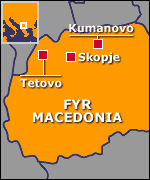
| | Monday, 16 September, 2002, 19:08 GMT 20:08 UK Peace wins in Macedonia poll  Voters' expectations are high
That would have raised the spectre of a contested result, with claims of electoral fraud and the possibility of public unrest. For now, Macedonia is at peace. It is a fractious peace, underpinned by the presence of Nato monitors and plagued by sporadic outbursts of local violence. But it shows no serious sign of collapse. However, the voters' rejection of the current government has had as much to do with concern over corruption as the fear of another Balkan war. The pressure will be on the SDSM, and its leader, Branko Crvenkovski, to deliver improvements. The International Crisis Group, a think-tank which produces regular reports on the Balkans, describes corruption in Macedonia as "endemic". In a recent report, it said corruption had "acquired the capacity not only to retard economic progress, but also to feed organised crime and, in turn, political and communal instability". It identified four areas as a priority for a clean-up: the health insurance fund, the customs service, the prosecutor's office and the judiciary. Political past This is a return to power for Mr Crvenkovski, Macedonia's prime minister from 1992 to 1998. A relatively moderate former communist, he broadly backs the Ohrid agreement, the peace deal which ended last year's uprising by ethnic Albanian guerrillas.
It is a sharp distinction from his predecessor, Mr Georgievski, who gave his backing to the Ohrid agreement only under intense international pressure. But Mr Crvenkovski has baggage of his own. Four years ago, he was voted out of office after the electorate became disillusioned with the painful process of economic and political transition. Macedonia was always one of the poorest republics in the old Yugoslavia. For several years, it was under an economic embargo from its southern neighbour, Greece, and its infrastructure was further damaged in the fighting last year. The SDSM's task will not be any easier this time. Albanian minority Mr Crvenkovski's most likely coalition partner looks to be the Albanian guerrilla leader turned politician, Ali Ahmeti. Mr Ahmeti was the commander of the Albanian National Liberation Army during last year's uprising. Among Albanian voters, his newly formed party all but swept the board, replacing the previous incumbents who had been discredited by their support for Mr Georgievski's government. Mr Ahmeti campaigned on a platform of consistent implementation of the Ohrid agreement, which gives greater recognition to the Albanian minority. Ethnic Macedonians, however, distrust Mr Ahmeti, whom they regard as a terrorist. Mr Georgievski played on this in his own campaign, warning that a vote for the SDSM would let Mr Ahmeti into government. Despite the bitterness stirred up by the campaign, Mr Georgievski conceded defeat in statesman-like fashion. He said the elections had been the fairest and most democratic since independence, and he wished the winners good luck. They will need it. | |
See also:  16 Sep 02 | Europe 13 Sep 02 | Europe 13 Aug 02 | Europe Internet links: The BBC is not responsible for the content of external internet sites Top Europe stories now: Links to more Europe stories are at the foot of the page. | ||||||||||||||||||||||||||||||||||||||||||||||||||||||||||||||||||||||||||||||||||||||||||||||||||||||||||||||||||||||||||||||||||||||||||||||||||||||||||||||||||||||||||||||||||||||||||||||||||||||||
|  |
|  E-mail this story to a friend E-mail this story to a friend |
 | |
| Links to more Europe stories |
| | | ||
 | ||||
 | | Back to top
| ||
| ---------------------------------------------------------------------------------- To BBC Sport>> | To BBC Weather>> | To BBC World Service>> ---------------------------------------------------------------------------------- © MMIII | News Sources | Privacy |






 The voters' rejection of the current government has had as much to do with concern over corruption as the fear of another Balkan war