|
 |
 | | | | | | |||||||||||||||||||||||||||||||||||||||||||||||||||||||||||||||||||||||||||||||||||||||||||||||||||||||||||||||||||||||||||||||||||||||||||||||||||||||||||||
| | | You are in: Europe | |||||||||||||||||||||||||||||||||||||||||||||||||||||||||||||||||||||||||||||||||||||||||||||||||||||||||||||||||||||||||||||||||||||||||||||||||||||||||||||||
|
| | Friday, 13 September, 2002, 11:10 GMT 12:10 UK Russian press on Iraq and Georgia 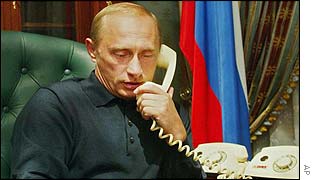 Vladimir Putin's tone surprised Tbilisi, says Kommersant The Russian press takes a strong interest in US policy towards Iraq, and the Kremlin's threat to send troops into Georgia's Pankisi Gorge. For most of them, US President George W Bush's speech to the United Nations came too late, but the financial daily, Kommersant, notes the different approaches to Iraq taken by Mr Bush and UN Secretary General, Kofi Annan. Their comments were like a "conceptual debate on Iraq which presented two mutually exclusive options," the paper says. "Kofi Annan rejected the possibility of military action without the support of the UN Security Council, while George Bush made it clear that the lack of UN support would not stop America." No proof The daily Izvestiya, sees parallels between US plans to attack Iraq, and President Vladimir Putin's warning of a possible Russian military operation on Georgian territory. "The two situations practically mirror each other: the US military says it has proof that Iraq is producing weapons of mass destruction, but doesn't present it. Russian diplomats are saying they have proof that there are terrorist bases on Georgian territory, but only quote the military." Kommersant sees signs of nervousness in Georgia. "Although officials in Georgia have said that Russian aggression will provoke a reaction in the world, it appears they are not altogether confident," the papers says. "They are afraid that the US will sacrifice Georgia for the sake of its operation against Iraq." No US blessing But Russia is still interested in world opinion, Kommersant says, and expects some understanding from the US. "Russia is counting on the support of the world community... It does not see its plans in relation to Georgia as aggression, but as a forced measure to protect Russian territory from international terrorism... "Of course, it does not expect US blessing for a special operation in Pankisi Gorge, but, it appears, Moscow hopes very much for a neutral or not too negative reaction from Washington." The paper goes on to say that the sharp tone of Mr Putin's warnings came as a surprise to Tbilisi, and has caused the Georgian military to stop downplaying the significance of the Chechen presence in the country. Warlord 'in Georgia' "Yesterday, the Georgian security forces expressed concern for just about the first time that 100 or 150 fighters under [Chechen rebel warlord] Ruslan Gelayev were hiding ... in Georgia's difficult mountain terrain having left the Pankisi Gorge," the paper says. "Formally, this confirms Russia's statement that there are fighters in Georgia." The conservative Trud daily says Russia has been very tolerant with Georgia. "Russia has persistently and patiently been asking the Georgian leadership to combat the fighters who have dug in in Pankisi Gorge," it says. "But official Georgia at first denied they were there... then admitted it but in essence refused to root out international terrorism on its territory." Chaos warning A commentary in the heavyweight daily, Nezavisimaya Gazeta, written before Mr Bush's UN address on Iraq, sees a threat to the solidarity that was forged between world leaders after 11 September. "There are plenty of world leaders who do not agree with Bush and [UK Prime Minister Tony] Blair," it says. "US military action against Iraq under the anti-terrorist banner will set a most dangerous precedent prompting nearly every country to decide for itself who is the enemy terrorist. And this will lead to chaos in international relations," the article concludes. | | See also:  13 Sep 02 | Europe 11 Sep 02 | Europe 10 Sep 02 | Europe 02 Sep 02 | Europe Internet links: The BBC is not responsible for the content of external internet sites Top Europe stories now: Links to more Europe stories are at the foot of the page. | |||||||||||||||||||||||||||||||||||||||||||||||||||||||||||||||||||||||||||||||||||||||||||||||||||||||||||||||||||||||||||||||||||||||||||||||||||||||||||||
| |
|  E-mail this story to a friend E-mail this story to a friend |
| |
| Links to more Europe stories |
| | | ||
 | ||||
 | | Back to top
| ||
| ---------------------------------------------------------------------------------- To BBC Sport>> | To BBC Weather>> | To BBC World Service>> ---------------------------------------------------------------------------------- © MMIII | News Sources | Privacy |