|
 |
 | | | | | | |||||||||||||||||||||||||||||||||||||||||||||||||||||||||||||||||||||||||||||||||||||||||||||||||||||||||||||||||||||||||||||||||||||||||||||||||||||||||||||||||||||||||||||||||||||||||||||||||||||||||||||||||||||||||||||||||||||
| | | You are in: Europe | |||||||||||||||||||||||||||||||||||||||||||||||||||||||||||||||||||||||||||||||||||||||||||||||||||||||||||||||||||||||||||||||||||||||||||||||||||||||||||||||||||||||||||||||||||||||||||||||||||||||||||||||||||||||||||||||||||||||
|
| | Saturday, 7 September, 2002, 01:25 GMT 02:25 UK Eurozone 'relaxing' budget discipline 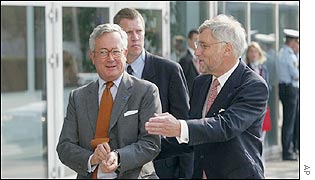 The ministers have little reason to celebrate
Finance ministers of the 12-member eurozone, meeting in the Danish capital, have admitted that stalling economic growth is likely to lead to a breach of the currency zone's strict rules on government finances.
That looks increasingly like wishful thinking - Portugal has already admitted it breached the limit last year. Many economists believe Germany, the weakest eurozone economy, will be next. Budgetary havoc The ministers now accept that this year their combined economies will grow by a miserly 1%.
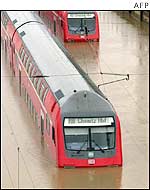
That will play havoc with their budget forecasts, originally based on a much rosier outlook. Many economists believe Germany will follow Portugal and breach the limit. Even before this summer's devastating floods Germany was deep in the red. But the EU's Monetary Affairs Commissioner, Pedro Solbes, said the cost of clearing up after the floods would be a mitigating factor when Germany's finances are assessed. That will be welcome news in Berlin but may not save the country from a humiliating disciplinary procedure. 'Tough medicine' The finance ministers have already launched formal proceedings against Portugal - if it breaches the rules again this year it could face a hefty fine. Critics say the stability pact is severely restricting Europe's ability to boost growth and revive its economy. Ministers in France and Italy in particular have hinted at a more flexible interpretation of the rules. But to judge by the reaction from other ministers in Copenhagen, most appear to believe the pacts tough medicine will bring the best long term recovery. Swiss dispute The ministers also stepped up pressure on Switzerland to amend its banking secrecy laws over its reluctance to help prevent tax evasion by EU citizens. The European Commissioner, Frits Bolkestein, said that if Switzerland refused to make concessions the EU could impose restrictions on investment in the country. Mr Bolkestein said that what the EU was asking was entirely reasonable - mainly that Switzerland provide information upon request about savings held by EU citizens in Swiss bank accounts. He said the EU needed such information in order to ensure all its citizens paid normal income tax. Switzerland's banking secrecy laws have made it a favourite location for Europeans wishing to hide undeclared savings. At present the Alpine state only provides foreign authorities with bank account details where fraud or other criminal activity is suspected. The dispute has come to a head because of a hard fought internal EU deal under which member states have agreed in principle to exchange information about savings held by each other's citizens. Two countries - Austria and Luxembourg - only agreed to waive their banking secrecy laws if non-EU financial centres were included in a wider deal. The EU has given itself until the end of this year to agree on an equivalent exchange of information with Switzerland and the United States. | |
See also:  28 Aug 02 | Europe 03 Sep 02 | Business 31 May 02 | Business 05 Jun 02 | Business Internet links: The BBC is not responsible for the content of external internet sites Top Europe stories now: Links to more Europe stories are at the foot of the page. | |||||||||||||||||||||||||||||||||||||||||||||||||||||||||||||||||||||||||||||||||||||||||||||||||||||||||||||||||||||||||||||||||||||||||||||||||||||||||||||||||||||||||||||||||||||||||||||||||||||||||||||||||||||||||||||||||||||
| |
|  E-mail this story to a friend E-mail this story to a friend |
| |
| Links to more Europe stories |
| | | ||
 | ||||
 | | Back to top
| ||
| ---------------------------------------------------------------------------------- To BBC Sport>> | To BBC Weather>> | To BBC World Service>> ---------------------------------------------------------------------------------- © MMIII | News Sources | Privacy |