|
 |
 | | | | | | ||||||||||||||||||||||||||||||||||||||||||||||||||||||||||||||||||||||||||||||||||||||||||||||||||||||||||||||||||||||||||||||||||||||||||||||||||||||||||||||||||||||||||||
| | | You are in: Europe | ||||||||||||||||||||||||||||||||||||||||||||||||||||||||||||||||||||||||||||||||||||||||||||||||||||||||||||||||||||||||||||||||||||||||||||||||||||||||||||||||||||||||||||||
|
| | Wednesday, 4 September, 2002, 11:20 GMT 12:20 UK Russian convicts prop up arms industry 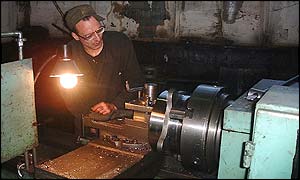 Prisoners build tanks for the booming arms industry
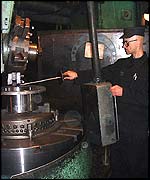
Amid sparks, burning smells and the screech of metal on metal, the inmates of Prison Colony Number 13 in the town of Nizhny Tagil are hard at work.
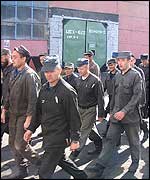
They are prisoners and they build tanks for Russia's booming arms industry. Under a contract between the prison and the local tank factory, the 80 convicts are making parts for Russia's T-90s main battle tank. It is the flagship export of Russia's arms industry and more than 300 of them are being made for India. With Moscow's arms sales on the up - $4.2bn worth of exports in 2001 - the tanks produced with the help of the prisoners in the Urals region could end up not just in India, but in the armies of many other countries of the world. Prisoners' pride Alexander Dorienko has been in prison for seven years, with one year to go on a sentence for armed robbery. Now he is the senior worker on the tank part production line. During his compulsory military service, he drove tanks for the Russian army then posted in East Germany.
For him, there is no shame in being in prison and helping to make heavy weaponry. "We're proud 100% of our tanks, proud that we help make them and that they're the best in Russia, and in the whole world. A tank is the face of Russia." Historically, the Urals region, around 1,660 kilometres (1,000 miles) east of Moscow, has been the centre of the armament industry. Many of the factories in Nizhny Tagil date back to the 18th Century and the time of Tsar Peter the Great, the days of muskets and cannon balls. And the use of convict labour on the arms production line is just a revival of a past practice. In the dark days of World War II and the age of Stalin, prisoners were always employed to do the dirty work of the defence industry.
Even the inventors and designers of some of the deadliest weapons in history worked under supervision in Urals prison camps. "It's our historical work in this region and now it's happening here in the prison too. I don't think there's anything unnatural about that," says Captain Alexander Kuchin, head of production at Colony Number 13. "I'm glad for the prisoners. Everyone should work for the prosperity of his country and for its defence capability, so it's normal." So, since 2000, the country's main tank factory, Uralvagonzavod, has been employing 80 of the 1,800 prisoners to make parts for the caterpillar tracks of the T-90s. Cost-cutting The economics of this make a lot of sense. Prisoners are not paid anywhere near the salaries of qualified defence workers in the West. So the prices for Russia's tanks are extremely competitive. According to Ruslan Pukhov, a Moscow-based arms industry analyst, the Russian T-90s will cost a potential client $1.8m.
Compare that to the $3.5m for the American equivalent, or up to $5.5m for the French version, and you can see why many of the world's poorer countries turn to Moscow. Just how much the use of convict labour reduces the cost of Russian tanks has yet to be analysed, but it definitely has some influence. No qualms When it comes to buying weapons produced by prisoners, says Ruslan Pukhov, many countries are not at all squeamish. "The majority of Russian clients are not as sensitive as the subjects of Her Majesty the Queen, or the citizens of the United States. I think the Chinese and Indians are absolutely indifferent towards this, and African clients also." For the prison authorities, involvement in the arms industry is regarded as a plus. Colony Number 13's governor, Colonel Alexander Konovalov, can see only benefits for his inmates. "The main thing is that the prisoners work," he says. "What they make, whether it be parts for tanks or agricultural machinery - that's of secondary importance." So far, there is no evidence of the trend for convict labour in the arms industry taking root across Russia. There are only a few local agreements, such as the one in Nizhny Tagil. But with Russia's arms factories increasingly turning to exports to keep themselves afloat, they may find cost-cutting, as demonstrated by the experiment in the Urals, a very tempting strategy. | | See also:  28 Mar 02 | Europe 24 Oct 01 | Media reports 12 Jun 99 | Europe 27 Dec 01 | Media reports Internet links: The BBC is not responsible for the content of external internet sites Top Europe stories now: Links to more Europe stories are at the foot of the page. | ||||||||||||||||||||||||||||||||||||||||||||||||||||||||||||||||||||||||||||||||||||||||||||||||||||||||||||||||||||||||||||||||||||||||||||||||||||||||||||||||||||||||||||
| |
|  E-mail this story to a friend E-mail this story to a friend |
| |
| Links to more Europe stories |
| | | ||
 | ||||
 | | Back to top
| ||
| ---------------------------------------------------------------------------------- To BBC Sport>> | To BBC Weather>> | To BBC World Service>> ---------------------------------------------------------------------------------- © MMIII | News Sources | Privacy |