|
 |
 | | | | | | |||||||||||||||||||||||||||||||||||||||||||||||||||||||||||||||||||||||||||||||||||||||||||||||||||||||||||||||||||||||||||||||||||||||||||||||||||||||||||||
| | | You are in: Europe | |||||||||||||||||||||||||||||||||||||||||||||||||||||||||||||||||||||||||||||||||||||||||||||||||||||||||||||||||||||||||||||||||||||||||||||||||||||||||||||||
|
| | Monday, 5 August, 2002, 11:07 GMT 12:07 UK Greek group 'planned foreigners attack' 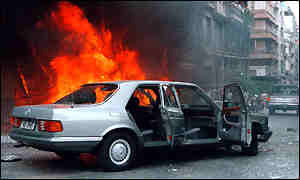 The group is blamed for 23 deaths Greek investigators say material seized from the November 17 militant group shows it plotted a series of high-profile strikes against international targets in northern Greece in the early 1990s. The American, British and Turkish consulates in Thessaloniki (Salonica) were among the targets put under surveillance by the group in the early 1990s, the investigators say. The Athens newspaper Kathimerini, which published extracts from the computer records found at the group's hideout, says attacks were also considered against international military forces heading for the former Yugoslavia. In a separate development on Sunday, police found a small quantity of explosives buried near the 19th-Century stadium that hosted the first modern Olympics, but authorities were unable to say whether they belonged to November 17. 'Naval targets' The group is held responsible for 23 killings in the past 27 years, including the murder of British military attache Brigadier Stephen Saunders in June 2000. The computer records show November 17 had been keeping watch on buildings, vehicles and people related to suspected targets in Thessaloniki, Greece's second largest city, including its harbour. From the early 1990s, that harbour has been used by the international forces heading to and from the former Yugoslavia. The newspaper also says that, according to police sources, the records show that November 17 had been preparing to steal diving equipment from shops in the harbour area. Motives This would suggest the organisation had been planning a spectacular strike against naval targets, possibly ships carrying troops and military hardware to the Balkans, it says. Such strikes have never materialised and the police are still trying to understand what made the organisation abandon its plan. The authorities have also been trying to decipher November 17's wider motives, taking into consideration that the repercussions for the country's foreign relations could have been immense, says the BBC's Athens correspondent, Panos Polyzoidis. Fifteen suspected members of the group have been arrested since a bungled bomb attack injured one of its alleged gunmen in late June. | | See also:  30 Jul 02 | Europe 18 Jul 02 | Europe 17 Jul 02 | UK 04 Jul 02 | Europe 06 Jun 01 | UK 09 Jun 00 | Europe 08 Jun 00 | Europe Internet links: The BBC is not responsible for the content of external internet sites Top Europe stories now: Links to more Europe stories are at the foot of the page. | |||||||||||||||||||||||||||||||||||||||||||||||||||||||||||||||||||||||||||||||||||||||||||||||||||||||||||||||||||||||||||||||||||||||||||||||||||||||||||||
| |
|  E-mail this story to a friend E-mail this story to a friend |
| |
| Links to more Europe stories |
| | | ||
 | ||||
 | | Back to top
| ||
| ---------------------------------------------------------------------------------- To BBC Sport>> | To BBC Weather>> | To BBC World Service>> ---------------------------------------------------------------------------------- © MMIII | News Sources | Privacy |