|
 |
 | | | | | | ||||||||||||||||||||||||||||||||||||||||||||||||||||||||||||||||||||||||||||||||||||||||||||||||||||||||||||||||||||||||||||||||||||||||||||||||||||||||||||||||||||||||||||||||||||||||||||
| | | You are in: Europe | ||||||||||||||||||||||||||||||||||||||||||||||||||||||||||||||||||||||||||||||||||||||||||||||||||||||||||||||||||||||||||||||||||||||||||||||||||||||||||||||||||||||||||||||||||||||||||||||
|
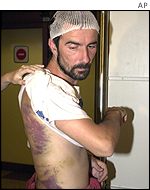
| | Monday, 22 July, 2002, 17:11 GMT 18:11 UK Genoa one year on  Protesters say they were beaten without provocation
There is an old joke which says the test of a good police force is one which catches more criminals than it employs. On that basis, the unit which raided the two schools being used by the Genoa protesters last year could end up looking like a very bad force indeed.
The police raid came at the end of three days of protests. I was visiting the building which had been used by the Genoa Social Forum and alternative media activists to organise the demonstrations and report on them for the anti-globalisation movement. On the other side of the road, the Diaz school was being used as a dormitory by campaigners from all around Europe. Most people were relaxing and preparing to leave town the following day. Only the most paranoid expected trouble... Pasta moment Just after midnight, there was a commotion outside and the sound of a helicopter overhead. People rushed to barricade the doors, but the police broke in through a back entrance. They turned off the web server connecting the building to the outside world and confiscated the hard disks from the legal team's computers.
The disks contained testimonies about police actions during the protests. We were all rounded up and made to stand against the wall. The police stopped me from using my mobile phone to speak to news programmes and my BBC colleague Arthur Neslen protested. He was dragged downstairs by a helmeted officer who responded to his objections with smacks from his baton. And then a surreal moment. Perhaps the presence of journalists worried the police. We were all allowed to sit on the floor and suddenly a large pot of pasta was passed between us and the police encouraged us to have a mouthful each. And then an MP from the Communist Party marched in and ordered the police to leave. 'Blood on the radiators' Across the road, there was no pasta, only violence. A British volunteer with the Indymedia website, Marcus Sky, was beaten in the street outside; he ended up with several broken ribs and a punctured lung.
A special police unit then broke into the Diaz school and beat most of those inside. Of the 93 arrested, 62 needed hospital treatment. We could hear screams coming from inside and an angry protest began around the police cordon, which only became angrier as more and more people were brought out on stretchers. After about an hour and a half, the police left and we all ran inside. The remains of several computers and the scattered belongings of those who had been sleeping littered the gymnasium floor. But upstairs was worse - blood on the walls and the floors and the radiators. Investigations The police alleged that those they arrested were part of the so-called Black Block - hardcore anarchists.
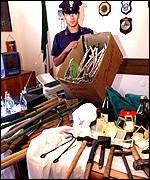
At a press conference after the raid they claimed an officer had been stabbed and showed off an assortment of hammers, knives, pick-axes, balaclavas and two Molotov cocktails. Now magistrates seem to have established that the stabbing never happened, the petrol bombs were found earlier in the day at a different location and the tools belonged to builders who were renovating the school. There are now at least 10 criminal investigations into what happened in Genoa. Magistrates have notified around 80 officers they are being investigated for alleged crimes committed during the school raid, the street protests and at the Bolzaneto detention centre where, Amnesty International alleges, some 200 protesters were tortured. There are stories of officers urinating on prisoners, beating them, removing piercings with pliers and in one case forcing a man with a false leg to stand for 24 hours. Resignation calls On 2 August last year, Italy's Interior Minister announced that the Genoa Chief of Police, the head of the Police Anti-Terrorist Unit and the Deputy Chief of the National Police - who was in charge of the G8 operation - were being moved to other duties.
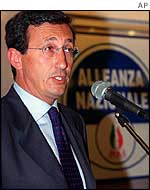
By November, these three individuals had re-appeared in other posts and in fact appeared to have been promoted. The Deputy Chief of the State Police had been made deputy head of SISDE - the Italian Intelligence Service, while the head of the anti-terrorist unit has become Director of CESIS - the committee overseeing the intelligence services. It was also reported that the head of the Genoa police had reappeared in a prominent post in SISDE. Protesters have alleged that the police action was sanctioned by politicians and they have called upon the deputy prime minister, Gianfranco Fini, of the post-fascist National Alliance Party, to resign. So far, he has stood firm and he has strongly defended the actions of the security forces. No police officer has yet been formally charged with any wrong-doing, but many of those who were injured at Genoa are doggedly pursuing their cases. The wheels of Italian justice are turning very slowly, but there may be a few surprises yet to come. | |
See also:  22 May 02 | Europe 08 Aug 01 | Europe 16 Jul 01 | Europe 27 Jul 01 | Europe 27 Jul 01 | Europe 22 Jul 01 | Europe Internet links: The BBC is not responsible for the content of external internet sites Top Europe stories now: Links to more Europe stories are at the foot of the page. | ||||||||||||||||||||||||||||||||||||||||||||||||||||||||||||||||||||||||||||||||||||||||||||||||||||||||||||||||||||||||||||||||||||||||||||||||||||||||||||||||||||||||||||||||||||||||||||
| |
|  E-mail this story to a friend E-mail this story to a friend |
| |
| Links to more Europe stories |
| | | ||
 | ||||
 | | Back to top
| ||
| ---------------------------------------------------------------------------------- To BBC Sport>> | To BBC Weather>> | To BBC World Service>> ---------------------------------------------------------------------------------- © MMIII | News Sources | Privacy |