|
 |
 | | | | | | ||||||||||||||||||||||||||||||||||||||||||||||||||||||||||||||||||||||||||||||||||||||||||||||||||||||||||||||||||||||||||||||||||||||||||||||||||||||||||||||||||||||||||||||||||
| | | You are in: Europe | ||||||||||||||||||||||||||||||||||||||||||||||||||||||||||||||||||||||||||||||||||||||||||||||||||||||||||||||||||||||||||||||||||||||||||||||||||||||||||||||||||||||||||||||||||||
|
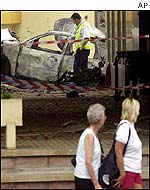
| | Tuesday, 25 June, 2002, 14:44 GMT 15:44 UK ETA targets Spain's tourism Cheap holidays are available despite the risk of bombs
This focus reached a peak in the mid-1990's, when ETA bombs exploded with alarming regularity in Spain's Mediterranean coastal resorts.
Since that low-point, ETA appears to have changed its strategy somewhat, giving telephone warnings before attacks and timing bombs to coincide with less busy times of the day, when fewer people are likely to get hurt. As far as tourism is concerned, the intention seems to be to cause as much damage as possible to the industry - not to kill foreign visitors in Spain. Serious embarrassment By ruining the reputation of Spain as a cheerful, relaxing place for a holiday, ETA wants to inflict as much harm as possible on the Spanish Government, which relies on tourism revenues for 12% of its GDP.
The bombings caused serious embarrassment to the government at a time when the entire democratic world has declared its support for US President George W Bush's global war on terrorism. We can expect that ETA will continue its summer bombing campaign, which every year is openly declared by the group and published in the pro-ETA newspaper 'Gara', 2002 being no exception. However, with a growing number of ETA members and supporters being arrested (this year, more than 200 in Spain and France at the last count), ETA does seem to be having some difficulty finding people to carry out its attacks. The evidence for this is that, unusually for Spain, only one person has died in ETA-related violence so far this year, and that was a local politician - in one of the "targeted killings" which ETA regularly carries out as part of its campaign to put pressure on the Spanish Government and terrorise the political establishment. Last year's summer bombing campaign came to an abrupt end when an ETA activist blew herself up as she was preparing explosives on the coast. Hard-line policy If ETA keep up the bombings, past experience has shown that, in general, tourists either have very short memories, or do not read the newspapers. Most people who come to Spain are more interested in a cheap beach holiday, which is readily available, than the local political situation, even if it does come with the risk of bombs.
If the government gets its way, Batasuna and any other political party which is deemed to promote terrorism, violence or racism, or to advocate radical changes in Spain's existing structure (for example, an independent Basque state), will soon be made illegal. Right now, the only peace process which exists is the campaign by the Basque peace group, Elkarri, to bring all political and social groups in the Basque region together for discussions on how to end the violence. However, the Spanish Government says there can be no talks while the violence continues. | |
See also:  25 Jun 02 | Europe 21 Jun 02 | Europe 05 Jun 02 | Europe 04 Jun 02 | Europe 30 Apr 02 | Europe 21 Mar 02 | Europe Internet links: The BBC is not responsible for the content of external internet sites Top Europe stories now: Links to more Europe stories are at the foot of the page. | ||||||||||||||||||||||||||||||||||||||||||||||||||||||||||||||||||||||||||||||||||||||||||||||||||||||||||||||||||||||||||||||||||||||||||||||||||||||||||||||||||||||||||||||||||
| |
|  E-mail this story to a friend E-mail this story to a friend |
| |
| Links to more Europe stories |
| | | ||
 | ||||
 | | Back to top
| ||
| ---------------------------------------------------------------------------------- To BBC Sport>> | To BBC Weather>> | To BBC World Service>> ---------------------------------------------------------------------------------- © MMIII | News Sources | Privacy |