|
 |
 | | | | | | |||||||||||||||||||||||||||||||||||||||||||||||||||||||||||||||||||||||||||||||||||||||||||||||||||||||||||||||||||||||||||||||||||||||||||||||||||||||||||||||||||||||||||||||||||||||||||||||||||||||||
| | | You are in: Europe | |||||||||||||||||||||||||||||||||||||||||||||||||||||||||||||||||||||||||||||||||||||||||||||||||||||||||||||||||||||||||||||||||||||||||||||||||||||||||||||||||||||||||||||||||||||||||||||||||||||||||||
|
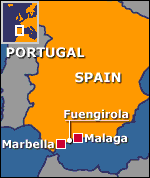
| | Friday, 21 June, 2002, 22:04 GMT 23:04 UK Car bombs hit Spain Police got phone warnings before the explosions A car bomb exploded late on Friday in the northeastern Spanish city of Zaragoza, after two earlier blasts in the south of the country. A security guard was injured in Zaragoza, while explosions in the resorts of Marbella and Fuengirola injured at least six people including three Britons. A British man is critically ill in hospital after the car bomb in Fuengirola, which also slightly injured two British children, a Moroccan and a Spanish couple.
The bombs - all blamed on the Basque separatist group ETA and preceded by telephone warnings - coincided with the start of a two-day summit of European Union leaders in Seville, about 160 km (100 miles) north-west of Fuengirola. Each bomb contained about 30 kilograms (66 pounds) of explosives. Friday evening's explosion in Zaragoza went off in a car park outside the Corte Ingles department store. A warning from a caller claiming to belong to ETA was received 15 minutes before the blast. The Marbella explosion, which came earlier in the day, did not cause any casualties. Tip-off According to Spanish national radio, a 35-year-old Briton - a Londoner in his 30s - hit by shrapnel in the Fuengirola blast is undergoing urgent surgery in hospital. Spanish police said he ignored warnings not to cross into a cordoned-off area.
A British Embassy official said he was "very seriously injured. "The hospital where he was operated on said he had a deep wound to his chest and injuries affecting his lungs. He's currently in a stable situation." The blast happened at about 0705 local time (0505 GMT) near Las Piramides Hotel, which is popular with British and German tourists. Police said the Basque separatist group ETA phoned a warning through just minutes before the Fuengirola blast, but gave the wrong address. The police still managed to locate the car, and cordon off the area. "This must have been an itinerant (ETA) command cell that probably came here, left the bomb, and went again," said an Interior Ministry official, Jose Torres Hurtado. "It's not the first time this has happened in Andalusia," he said. An anonymous phone warning also came from ETA before the Marbella attack. Previous attacks Holidaymakers, who were still in their beds, said they were first aware of a huge explosion, followed by billowing smoke and flying glass. ETA carried out similar attacks on tourist sites last summer. Although ETA does not normally claim responsibility for its actions until weeks afterwards, it typically times attacks to coincide with major political events. A Spanish Government spokesman, Pio Cabanillas, told Reuters news agency it appeared the bombings were timed to coincide with the Seville meeting. "ETA attacks where and when it can, and when there are meetings that can give it a greater media impact, they try to take advantage of that," he said. In Seville, British Foreign Secretary Jack Straw expressed "profound concern and anger" over the attacks. "My condemnation of this terrorist outrage is absolute... and would be the same whether or not it was (a) British or any other citizen who had been injured," he said. Only last week, police found 131 kilograms (288 pounds) of explosives, along with detonators and wiring, further up the coast near Valencia. Violent campaign ETA has killed more than 800 people in a 30-year independence campaign for the Basque region. There is huge security at the Seville summit, with about 10,000 police deployed in the city. On Thursday, ETA accused the EU of leaving the Basques behind, complaining that a "Basque homeland has no place in the current Europe". ETA wants a state in the Basque areas of northern Spain and south-western France. | |
See also:  21 Jun 02 | Europe 05 Jun 02 | Europe 04 Jun 02 | Europe 30 Apr 02 | Europe 21 Mar 02 | Europe Internet links: The BBC is not responsible for the content of external internet sites Top Europe stories now: Links to more Europe stories are at the foot of the page. | |||||||||||||||||||||||||||||||||||||||||||||||||||||||||||||||||||||||||||||||||||||||||||||||||||||||||||||||||||||||||||||||||||||||||||||||||||||||||||||||||||||||||||||||||||||||||||||||||||||||||
| |
|  E-mail this story to a friend E-mail this story to a friend |
| |
| Links to more Europe stories |
| | | ||
 | ||||
 | | Back to top
| ||
| ---------------------------------------------------------------------------------- To BBC Sport>> | To BBC Weather>> | To BBC World Service>> ---------------------------------------------------------------------------------- © MMIII | News Sources | Privacy |