|
 |
 | | | | | | ||||||||||||||||||||||||||||||||||||||||||||||||||||||||||||||||||||||||||||||||||||||||||||||||||||||||||||||||||||||||||||||||||||||||||||||||||||||||||||||||||||||||||||||||||
| | | You are in: Europe | ||||||||||||||||||||||||||||||||||||||||||||||||||||||||||||||||||||||||||||||||||||||||||||||||||||||||||||||||||||||||||||||||||||||||||||||||||||||||||||||||||||||||||||||||||||
|
| | Wednesday, 5 June, 2002, 15:11 GMT 16:11 UK Putin adopts peacemaker's role Most of Russia's territory is in Asia
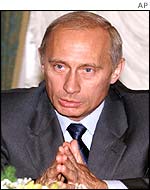
The Russian President, Vladimir Putin, made strenuous efforts at the summit of Asian leaders in Kazakhstan to bring together the leaders of India and Pakistan. But what was Mr Putin's main motivation - to ensure peace in the region, or to raise his own profile as an international statesman?
At a time when western nations were advising their nationals to leave the area of potential conflict between India and Pakistan, had Mr Putin been the catalyst for an India-Pakistan meeting it would have been nothing short of a coup in international relations. But it was not to be - as Mr Putin perhaps anticipated. Too close for comfort When trying to put a brave face on events after the summit, the Russian president said that Russia had never set a goal of bringing the two leaders together. In a sense, therefore, Mr Putin was in a "no-lose" situation. But what might he have gained?
Whilst the wider international community might be concerned about the implications of a nuclear conflict in the region - even if it is limited to tactical weapons - Russia has serious geographical worries about a conflagration near its border. Moscow may be a continent away, but for major Russian centres of population in Siberia such as Novosibirsk or Irkutsk, India and Pakistan are almost neighbours. Shrewd politician There is no doubt, though, that Mr Putin has a political agenda, too. One of the outstanding features of the Russian president's two years in office has been the way in which he has impressed world leaders with his grasp of international affairs. It has not been an entirely smooth path.
In the wake of the fiasco of the Yugoslav elections in September 2000, when world opinion agreed that Vojislav Kostunica had clearly defeated Slobodan Milosevic, Mr Putin offered to mediate by inviting both men to Moscow - whilst he was on his way to India for a four day meeting. The issue was resolved well before Mr Putin returned to Moscow. Bridging continents But simply by offering to mediate between India and Pakistan, Mr Putin showed not only that he - and, therefore, Russia - was willing to play an international role, but that he was in a position to intervene in a way in which other countries, such as the USA and Britain, were not. Mr Putin has shown that Russia is an important part of Europe, and he is not alone among Russians in wanting Moscow to be considered as a major European capital. But whilst the majority of his country's population lives in Europe, most of Russia's territory is in Asia. And so, just by speaking out in Kazakhstan on the India-Pakistan conflict, the Russian leader has managed to remind the world that Russia's interests go far beyond its European borders. | |
Internet links:  The BBC is not responsible for the content of external internet sites Top Europe stories now: Links to more Europe stories are at the foot of the page. | ||||||||||||||||||||||||||||||||||||||||||||||||||||||||||||||||||||||||||||||||||||||||||||||||||||||||||||||||||||||||||||||||||||||||||||||||||||||||||||||||||||||||||||||||||
| |
|  E-mail this story to a friend E-mail this story to a friend |
| |
| Links to more Europe stories |
| | | ||
 | ||||
 | | Back to top
| ||
| ---------------------------------------------------------------------------------- To BBC Sport>> | To BBC Weather>> | To BBC World Service>> ---------------------------------------------------------------------------------- © MMIII | News Sources | Privacy |