
|
 |
 | | | | | | |||||||||||||||||||||||||||||||||||||||||||||||||||||||||||||||||||||||||||||||||||||||||||||||||||||||||||||||||||||||||||||||||||||||||||||||||||||||||||||||||||||||||
| | | You are in: Europe | |||||||||||||||||||||||||||||||||||||||||||||||||||||||||||||||||||||||||||||||||||||||||||||||||||||||||||||||||||||||||||||||||||||||||||||||||||||||||||||||||||||||||||
|
| | Tuesday, 28 May, 2002, 20:40 GMT 21:40 UK Analysis: Europe left scrambling for a role EU: Unsure of its own identity
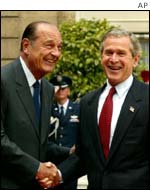
Britain's Prime Minister Tony Blair has said the EU should be "a superpower but not a superstate", and a "force for good in the world". The Swedish prime minister Goran Persson, in the chair of the EU's presidency last year, claimed for Europe the status of "an equal partner of the United States" in global affairs. And the senior European commissioner Chris Patten, who controls the world's largest aid budget, says the EU should be a "counterpoint" to the US, relying more on diplomacy and respect for the United Nations and less on military force. Yet since the 11 September attacks on the US, much of this has seemed irrelevant. Changing times In his speech in the Reichstag in Berlin last Thursday, President George W Bush sounded a "wakeup call" to the Europeans.
His father had already spelled out his hopes for a "new world order" based on agreed international rules when he was president. Just a dozen years later, Bush junior has been spurred on by the logic of his "war on terrorism" to design something like this, based on the idea that what the US says is right. European leaders have complained bitterly about American "unilateralism", "simplicity" and even "unhelpfulness". They feel aggrieved by America's imperious behaviour, imposing protectionist steel tariffs and withdrawing from a series of international agreements, such as the Kyoto Climate Convention and the founding of an International Criminal Court. Mopping up The latest stage in this process, following America's scrapping of the ABM treaty, is the creation of a new council which draws Russia into Euro-Atlantic security structures as never before, but making clear that the US sets the terms. The US and Russia are each represented by forceful leaders taking critical decisions for their people. But the EU appears internally divided and unsure how to assert its values abroad. President Bush's tour has underlined the gulf in attitudes between most European states and the US, especially over US threats of military action against Saddam Hussein in Iraq. America's use of overwhelming military force to defeat the Taleban regime in Afghanistan has made clear that Europe remains a junior partner of the US in military matters. As one European diplomat put it: "We Europeans are left doing the washing up." Sovereign issues And recent events have shown up two great obstacles to Europe projecting its power and influence First, Europe is failing to step up military spending to even come close to that of America. Even the EU's plans for a European rapid reaction force to carry out lesser tasks, like crisis management or peacekeeping, have been stymied by internal disputes. Secondly, the EU has no one figurehead or leader who can speak for all its people.
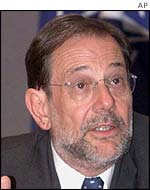
Javier Solana, the EU's top representative for foreign policy, now plays a useful role. He has been successful as a trouble-shooter who has eased lesser confrontations and conflicts, such as that between Serbia and Montenegro. But he lacks the authority to take decisions himself. The EU is also engaged in a year-long internal debate in a European "Convention", aimed at deciding basic things like who can represent the EU abroad. But the ideas that exist for creating some future title such as "President of Europe" are sure to lead to more argument and dissent. EU Commission President Romano Prodi says member-states must hand over their own sovereign powers in foreign and defence areas to him or his successor. Britain and France, both European states with permanent seats on the UN Security Council, are determined to preserve their own control over vital EU decision-making. Smaller EU states fear the creation of an EU "directorate" of big nations. Europe should benefit from the "new world order" which the United States appears to be designing. The planned enlargements of both NATO and the EU represent a success for European values. Yet in areas of grave tension - especially India and Pakistan, and the Middle East - the Europeans are frustrated and sidelined. They want to take a lead in maintaining world peace and eliminating great injustice, but they lack the profile and the means to do so. And there is serious discord between them and George W Bush's America. | |
See also:  14 May 02 | In Depth 24 May 02 | TV and Radio reports 24 May 02 | Europe 03 Feb 02 | Europe 15 May 02 | Country profiles 28 Feb 02 | Europe 22 Feb 01 | UK Politics Top Europe stories now: Links to more Europe stories are at the foot of the page. | |||||||||||||||||||||||||||||||||||||||||||||||||||||||||||||||||||||||||||||||||||||||||||||||||||||||||||||||||||||||||||||||||||||||||||||||||||||||||||||||||||||||||
| |
|  E-mail this story to a friend E-mail this story to a friend |
| |
| Links to more Europe stories |
| | | ||
 | ||||
 | | Back to top
| ||
| ---------------------------------------------------------------------------------- To BBC Sport>> | To BBC Weather>> | To BBC World Service>> ---------------------------------------------------------------------------------- © MMIII | News Sources | Privacy |






 TALKING POINT
 Nato
Nato