|
 |
 | | | | | | |||||||||||||||||||||||||||||||||||||||||||||||||||||||||||||||||||||||||||||||||||||||||||||||||||||||||||||||||||||||||||||||||||||||||||||||||||||||||||||||
| | | You are in: Europe | |||||||||||||||||||||||||||||||||||||||||||||||||||||||||||||||||||||||||||||||||||||||||||||||||||||||||||||||||||||||||||||||||||||||||||||||||||||||||||||||||
|
| | Tuesday, 26 February, 2002, 17:42 GMT Frozen couple sparks heated debate 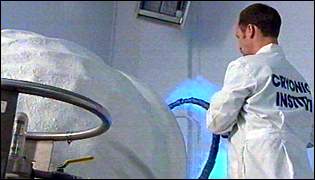 Cryonicists often head for the US to avoid European legislation A French couple who were frozen when they died in the hope that medical advances would one day revive them are facing a thaw at the hands of local authorities.
Dr Martinot became a much feted name in the world of cryonics - the freezing of dead people for potential revival in the future - when he froze his wife after she died of cancer in 1984. The 80-year-old was then placed in the same refrigerator by his son when he himself died last Friday, drawing fresh attention from the authorities to the issue. "What has been done is outlawed in France," a prosecutor told BBC News Online. "In this country, bodies must either be cremated or buried." Chilling It is not the first time the practice of freezing dead bodies has run into trouble with the French authorities. Less than two years ago, a court rejected an attempt by a brother and sister on the island of Reunion, which is French territory, to keep their dead mother's body refrigerated at home. The pair had wanted to keep her in a glass-topped freezer in the cellar. Many European countries have legislation in place restricting the preservation of dead bodies in such a way. In order to circumvent such restrictions, those interested in resuming life at a later date have struck arrangement with cryonics companies in the US, where it is permitted in several states. Expensive freeze The idea of preserving people for later repair first surfaced in science fiction works in the 1930s, but it was not until 1967 that the first man, Dr James Bedford, was frozen in liquid nitrogen. Cryonics is based on the fact that a dead body does not rot while frozen, and that in the future medical technology may have advanced sufficiently to cure the illnesses to which the patient initially succumbed, or repair fatal injuries suffered in an accident. Freezing however inflicts serious damage itself on cells which practitioners are not able to stop. Mr Martinot's own freezing experiment is likely to have cost him considerably less than that offered by cryonics companies in the US. One, Alcor, charges from $50,000 for freezing just the brain, and around $120,000 for a full body freeze, including the ongoing maintenance. | | See also:  12 Apr 01 | Europe 31 May 00 | Europe Internet links: The BBC is not responsible for the content of external internet sites Top Europe stories now: Links to more Europe stories are at the foot of the page. | |||||||||||||||||||||||||||||||||||||||||||||||||||||||||||||||||||||||||||||||||||||||||||||||||||||||||||||||||||||||||||||||||||||||||||||||||||||||||||||||
| |
|  E-mail this story to a friend E-mail this story to a friend |
| |
| Links to more Europe stories |
| | | ||
 | ||||
 | | Back to top
| ||
| ---------------------------------------------------------------------------------- To BBC Sport>> | To BBC Weather>> | To BBC World Service>> ---------------------------------------------------------------------------------- © MMIII | News Sources | Privacy |