|
 |
 | | | | | | ||||||||||||||||||||||||||||||||||||||||||||||||||||||||||||||||||||||||||||||||||||||||||||||||||||||||||||||||||||||||||||||||||||||||||||||
| | | You are in: Entertainment | ||||||||||||||||||||||||||||||||||||||||||||||||||||||||||||||||||||||||||||||||||||||||||||||||||||||||||||||||||||||||||||||||||||||||||||||||
|
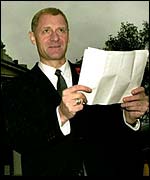
| | Thursday, 10 October, 2002, 09:22 GMT 10:22 UK Motion loses his thread  Andrew Motion was made Poet Laureate in 1998
At one level, the title of Poet Laureate Andrew Motion's latest collection, Public Property, seems a wry acknowledgement of his role as someone who "churns out" verse to order for the nation. The irony, though, is how much of Motion's ninth collection - though his first as Laureate - is occupied with his own private world, specifically his childhood. Personal history has often proven fertile ground for poets but not so for Motion on the evidence here. It is not as if he lacks potent material - the gulf with his army father, the tragic death of his mother - but the poems he produces fail to come to grips either with events or offer much in the way of deeper significance.
The Aftermath is typical, taking 76 lines to look back at a childhood walk and conclude that basically things change over time and you cannot recapture what has gone. Is that it? Similarly in Serenade, Motion devotes almost the entire poem to describing the world of a horse, tacking on a few lines about the accident in which it killed his mother in a way that is merely perverse rather than some piece of clever obliqueness. Many of the poems in the book deal with journeys, but too often the lines meander, like bored children hanging around looking for something to give their life a point. You are almost pathetically grateful then when something strikes a chord. In Self Help, an expedition "to find/the Margate where John Keats...hired lodgings like the swell/he never was" takes a well-caught Dickensian twist. Freedom A Perfect World, meanwhile, conjures up a Thameside walk "just for the pleasure of light/sluicing my head", filling it with telling resonances. Unfortunately, that still leaves nine tenths of the poems as the lamest of ducks. Motion's "jobbing" poems in his role as Laureate are among the worst, and efforts such as the dreadful Picture This (for the late Queen Mother) show why most of it was received so unflatteringly. It is ironic that one of the best things in this book is the short story, While I Was Fishing (dedicated to his Laureate predecessor Ted Hughes). Prose seems to better suit Motion's love affair with description, the extra space and looser constraints seeming to free him from the burden of poetry's concentrated intensity. "I have forgotten whatever/it was I wanted to say,/also the way I wanted/to say it" Motion writes in one of the collection's later poems, A Wall. It sounds like a man making a guilty plea. Public Property is published by Faber and Faber. | | See also:  10 Oct 02 | Entertainment 04 Oct 01 | Entertainment 19 May 99 | Entertainment 19 Jul 00 | UK 09 Mar 00 | Education 09 Apr 02 | Entertainment 15 Feb 02 | Entertainment 20 May 99 | Entertainment Internet links: The BBC is not responsible for the content of external internet sites Top Entertainment stories now: Links to more Entertainment stories are at the foot of the page. | ||||||||||||||||||||||||||||||||||||||||||||||||||||||||||||||||||||||||||||||||||||||||||||||||||||||||||||||||||||||||||||||||||||||||||||||
| |
|  E-mail this story to a friend E-mail this story to a friend |
| |
| Links to more Entertainment stories |
| | | ||
 | ||||
 | | Back to top
| ||
| ---------------------------------------------------------------------------------- To BBC Sport>> | To BBC Weather>> | To BBC World Service>> ---------------------------------------------------------------------------------- © MMIII | News Sources | Privacy |