|
 |
 | | | | | | |||||||||||||||||||||||||||||||||||||||||||||||||||||||||||||||||||||||||||||||||||||||||||||||||||||||||||||||||||||||||||||||||||||
| | | You are in: Entertainment | |||||||||||||||||||||||||||||||||||||||||||||||||||||||||||||||||||||||||||||||||||||||||||||||||||||||||||||||||||||||||||||||||||||||
|
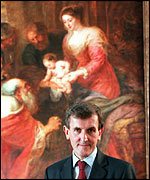
| | Thursday, 11 July, 2002, 10:08 GMT 11:08 UK Rubens' lasting legacy The Massacre of the Innocents has just sold for �49.5m Sir Peter Paul Rubens, whose painting The Massacre of the Innocents has just fetched �49.5m, was one of the most prolific and influential artists in Europe's history. More than 3,000 works have been attributed to the Flemish artist's studio, which flourished in 17th-Century Antwerp. Rubens's work came to epitomise the voluptuous qualities of Baroque art, combining the influence of Italian masters like Titian, Tintoretto, and Raphael and his native Flemish style. He was born in 1577, into a Calvinist family living in exile from Antwerp, but on his return to the city he was brought up and educated in the Catholic faith.
In 1600, he went to Italy where he studied and copied Titian, Tintoretto, and Raphael, as well as the works of his contemporaries, including Caravaggio and Carracci. By the time of his return to Antwerp in 1608 he was a known and successful painter. In 1609, Rubens was appointed court painter to the Regent Albert and Isabella and the following year he built himself a large house and studio. He began to receive a huge number of commissions from aristocrats, monarchs and the church. Tapestries The volume of commissions meant that he often did little but supervise much of the work attributed to him. But his conception was so powerful and his authority in the studio so absolute that almost everything proceeding from his workshop shows the stamp of his style. He explored all fields of painting, excelling in landscape, portrait and animal painting as well as his famous large-scale religious and allegorical works. The Gobelin factory produced tapestries after his sketches, and engravers copied his paintings, sending printed versions of the Rubens style all over Europe. Pupils His last big commission was the decoration of the Spanish King's hunting lodge, Torre de la Parada near Madrid, which he designed but was no longer able to carry out himself. By the time of his death in 1640, Rubens' influence in the Low Countries was overwhelming. It had also spread elsewhere in Europe by his journeys abroad - including Britain, where he painted the ceiling of the Banqueting House, now the only one of Rubens's major decorative schemes still in the position for which it was created. He shaped the work of his pupils, including portraitist Anthony Van Dyck (1599 - 1641), and was a longer-term influence on may artists who came after him - especially in France, where Watteau, Delacroix, and Renoir were among his greatest admirers. Rubens also taught and inspired the artists Jordaens, Snyders and Cornelis de Vos. And three and a half centuries after his death, the large sum paid for his The Massacre of the Innocents is bound to create a new wave of interest in the painter often known as the Prince of the Baroque. | | See also:  11 Jul 02 | Entertainment 11 Jul 02 | Entertainment 08 Mar 02 | Entertainment 07 Mar 02 | Entertainment 28 Feb 02 | Entertainment 20 Jun 01 | Entertainment 13 Dec 00 | Entertainment 23 Mar 00 | UK Internet links: The BBC is not responsible for the content of external internet sites Top Entertainment stories now: Links to more Entertainment stories are at the foot of the page. | |||||||||||||||||||||||||||||||||||||||||||||||||||||||||||||||||||||||||||||||||||||||||||||||||||||||||||||||||||||||||||||||||||||
| |
|  E-mail this story to a friend E-mail this story to a friend |
| |
| Links to more Entertainment stories |
| | | ||
 | ||||
 | | Back to top
| ||
| ---------------------------------------------------------------------------------- To BBC Sport>> | To BBC Weather>> | To BBC World Service>> ---------------------------------------------------------------------------------- © MMIII | News Sources | Privacy |