|
 |
 | | | | | | ||||||||||||||||||||||||||||||||||||||||||||||||||||||||||||||||||||||||||||||||||||||||||||||||||||||||||||||||||||||||||||||||||||||||||||||
| | | You are in: Entertainment | ||||||||||||||||||||||||||||||||||||||||||||||||||||||||||||||||||||||||||||||||||||||||||||||||||||||||||||||||||||||||||||||||||||||||||||||||
|
| | Wednesday, 12 June, 2002, 13:44 GMT 14:44 UK Arabia's richness revealed The exhibition looks at the history of Yemen
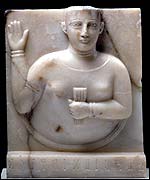
The Queen of Sheba exhibition at the British Museum is a fascinating look at a little-known but rich ancient culture. The seduction of King Solomon by the Queen of Sheba and her riches is one of the most dramatic stories in the Bible - and one most portrayed in art and literature. During Biblical times, the southern tip of the Arabia, now Yemen, was one of the most prosperous regions of the world, exporting gold, precious stones, and incense across the Arabian desert to Persia and the Middle East. The region, then known as the Kingdom of Saba, was based on intensive agriculture, with a huge dam allowing the cultivation of the desert - hence its Roman name, Arabia Felix.
The richness of the civilisation is reflected in its beautiful objects - including gold jewellery with brightly coloured stones, intricate wall-carvings, and bronze sculptures of lions and ibexes (a mountain goat that is one of the icons of the civilisation). Among the most spectacular objects are those associated with religion and death - including the alabaster death mask of a young woman and a huge bronze altar. The Kingdom of Saba, while rich, was much affected by other civilisations, and shows a progression through Egyptian, Persian, Greek and Roman styles that demonstrate the influence of trading links across the region. Conquered in the 5th Century AD, Saba disappeared from view after the Moslem conquest of Arabia. Fascinating figure Like much of the British Museum's rich collections, it was the colonists in South Yemen when it was a British protectorate (guarding the Suez Canal) who rediscovered many of the objects displayed in the exhibits. Sitting uneasily with the rest of the exhibit is a short history of representations of the Queen of Sheba in Western art, including both Renaissance works and Victorian paintings. The mythical Queen is a legend in three religions - but there is no evidence of her historical reality. Nevertheless, if the title of the exhibition will persuade more people to come and see the beautiful objects on display, it will have served its purpose. The Queen of Sheba Exhibition is on at the British Museum in London until 13 October. | | See also:  22 Dec 00 | Middle East 31 May 99 | Africa 07 Jun 99 | Africa 18 Jan 00 | Africa Internet links: The BBC is not responsible for the content of external internet sites Top Entertainment stories now: Links to more Entertainment stories are at the foot of the page. | ||||||||||||||||||||||||||||||||||||||||||||||||||||||||||||||||||||||||||||||||||||||||||||||||||||||||||||||||||||||||||||||||||||||||||||||
| |
|  E-mail this story to a friend E-mail this story to a friend |
| |
| Links to more Entertainment stories |
| | | ||
 | ||||
 | | Back to top
| ||
| ---------------------------------------------------------------------------------- To BBC Sport>> | To BBC Weather>> | To BBC World Service>> ---------------------------------------------------------------------------------- © MMIII | News Sources | Privacy |